
This is one of the insight articles of Earthwise Institute's research project - Ironmaking Asset Transitional Windows, as part of the research series - Industrial Asset Transitional Reinvestment. View the full project content
What the Data Shows
China’s ironmaking sector remains relatively fragmented beyond a small group of leading producers, while old capacity retirement is more heavily distributed among smaller and non-leading companies than among the largest corporate groups.
Key Highlights
- Corporate structure: Baowu Group stands far ahead of all other ironmakers, with 1/6 of national operating ironmaking capacity. Beyond Baowu, the top 10 groups together account for 47.7% of capacity, while the remaining 52.3% is dispersed across more than 150 other groups and companies.
- Capacity replacement activity leans toward the industry tail: Corporate groups outside the top ten hold roughly 1/2 of operating capacity but account for nearly 2/3 of both newbuild and retired capacity. Smaller and non-leading groups therefore participate disproportionately in both sides of capacity replacement, while leading ironmakers account for smaller shares of newbuild and retirement activity than their shares of operating capacity.
- Capacity consolidation: Capacity replacement retirement is spread across a large number of relatively small capacity holders: 81% of participating entities retired less than 5 mmtpa (million metric tonnes per annum), together accounting for only 42.4% of total retired capacity. Meanwhile, 77 top-level corporate entities exited ironmaking entirely. The pattern shows capacity being withdrawn from a broad base of smaller operators as the industry consolidates around larger corporate groups.
Lead Ironmakers
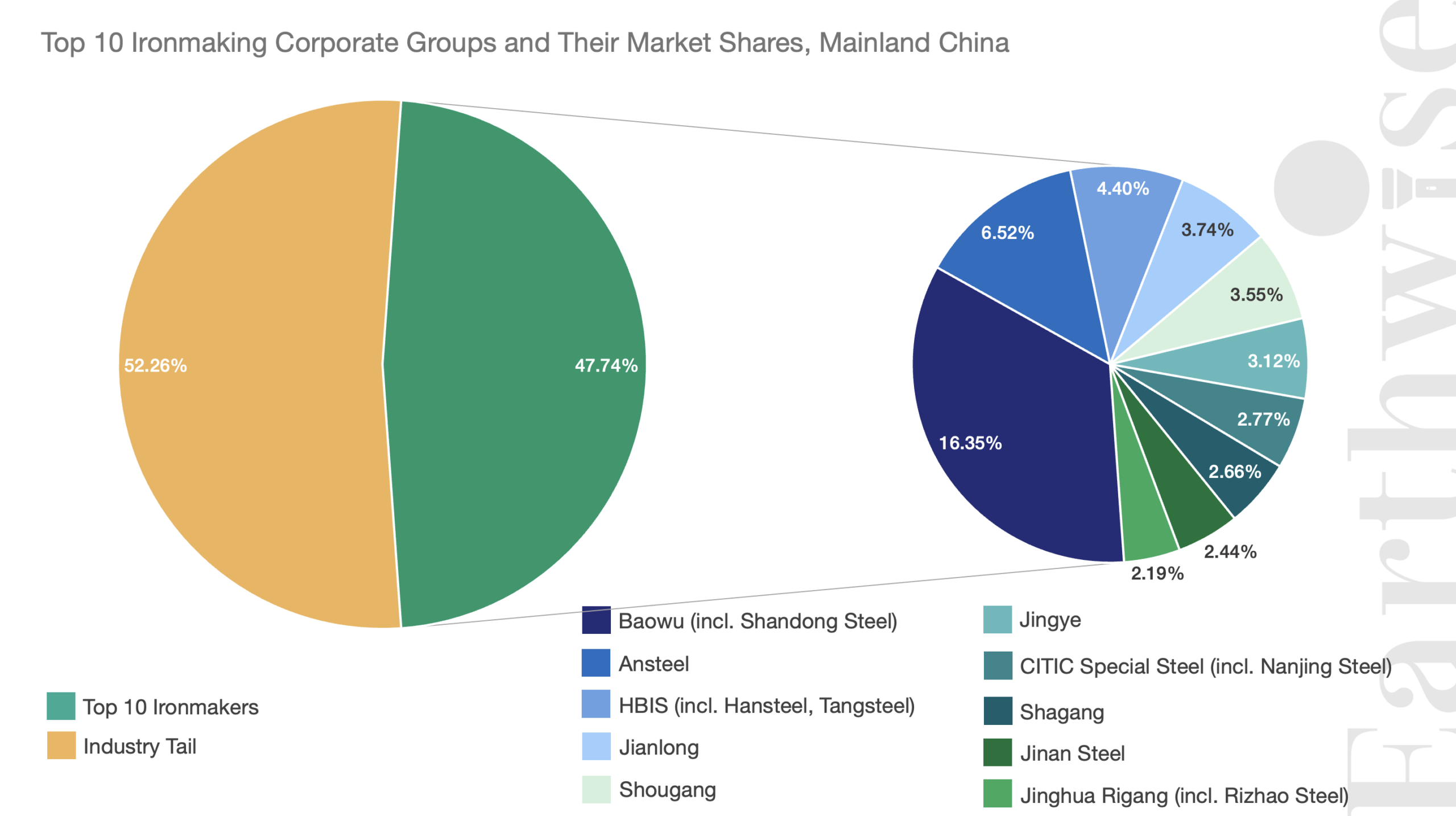
Figure 1: Top 10 Ironmaking Corporate Groups and Their Market Shares, Mainland China
Baowu Group, including Shandong Steel, is the largest ironmaking group in mainland China, accounting for 16.4% of national operating ironmaking capacity, substantially ahead of other companies. It is followed by Ansteel Group (6.5%), HBIS Group, including Hansteel and Tangsteel (4.4%), Jianlong Group (3.7%), Shougang Group (3.5%), Jingye Group (3.1%), CITIC Special Steel, including Nanjing Steel (2.8%), Shagang Group (2.7%), Jinan Steel (2.4%), and Jinghua Rigang, including Rizhao Steel (2.2%). Baowu therefore stands out as the clear market leader, while the remaining leading groups form a broader first tier with relatively similar capacity shares.
The top ten groups account for 47.7% of national operating ironmaking capacity, remaining below half of the total. The remaining 52.3% is distributed across more than 150 other groups and companies, indicating that China’s ironmaking sector remains relatively fragmented. Large groups such as Baowu, Ansteel, and HBIS will have significant influence over sectoral transition pathways, but sector-wide change will also require engagement with a large number of medium-sized and smaller companies.
Corporate Participation in Capacity Replacement Scheme
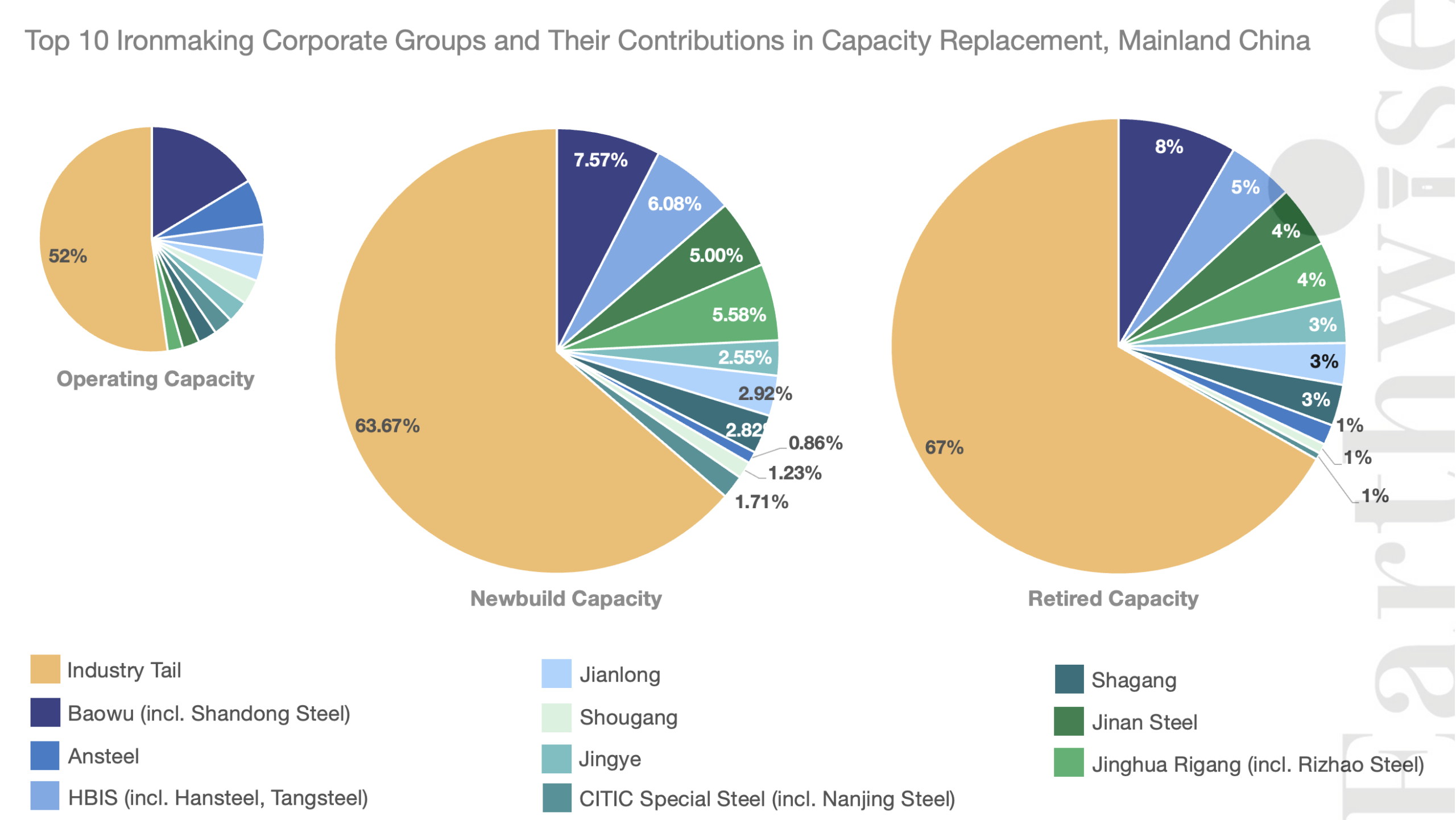
Figure 2: Top 10 Ironmaking Corporate Groups and their contributions in Capacity Replacement
*Remarks: Newbuild capacity includes both greenfield and in-situ replacement projects involved in the Capacity Replacement Scheme.
Both newbuild and retirement activity under the capacity replacement scheme is weighted toward the industry tail. Corporate groups outside the top ten account for around 52% of current operating ironmaking capacity, but their shares rise to 63.7% of identified newbuild capacity and 67% of identified retired capacity. In other words, the industry tail accounts for a disproportionately large share of capacity replacement activity on both sides of the process, covering both capacity additions through greenfield and in-situ replacement projects and capacity removals through retirement arrangements.
The concentration among leading groups is correspondingly lower. The top ten groups collectively account for around 48% of operating capacity, but only 36.3% of newbuild capacity and 33% of retirement capacity. Capacity replacement activity is therefore distributed across a broader group of smaller and non-leading companies than the current operating capacity structure, with this pattern visible in both newbuild and retirement projects.
Corporate Consolidation via Capacity Replacement
China’s ironmaking capacity replacement scheme has involved 131 corporate groups and companies (top-level corporate entities) and 244 plants. Of these, 118 top-level corporate entities and 188 plants participated in replacement retirements. Identified retired capacity varies substantially across participating entities, ranging from 116.6 tmtpa (thousand metric tonnes per annum) to 31.71 mmtpa, with an average of 3.20 mmtpa and a median of 1.73 mmtpa per entity. The gap between the average and median reflects the presence of a relatively small number of large retirement cases at the upper end of the distribution. Baowu has the largest identified retired capacity, while the lower end of the distribution consists of much smaller capacity holders.
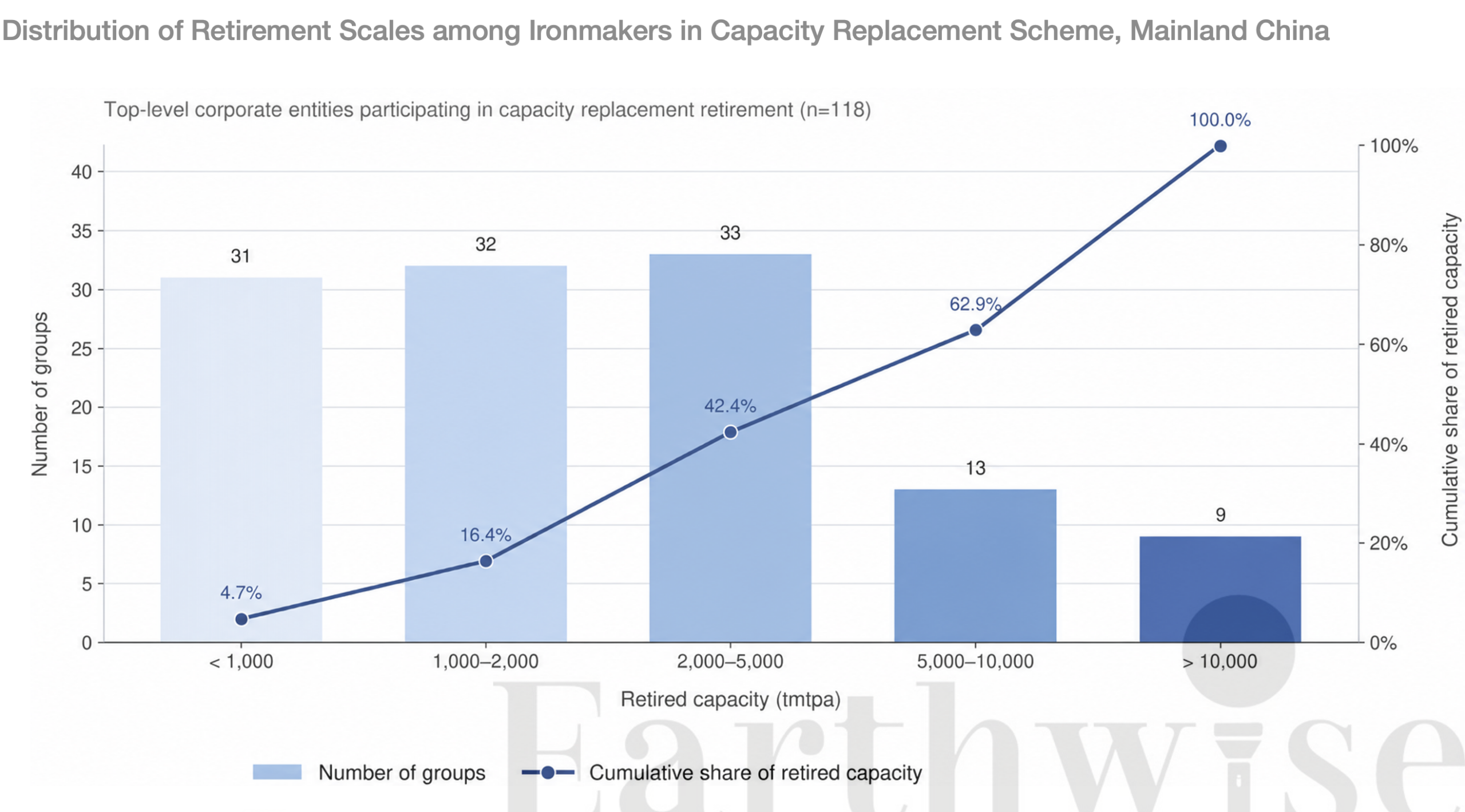
Figure 3: Distribution of Old BF Retirement Scales among Ironmakers, Mainland China
Old capacity retirement as capacity replacement scheme participation is concentrated at relatively small and medium scales. A total of 96 entities, or 81% of participants, have less than 5 mmtpa of identified retired capacity, together accounting for 42.4% of total retired capacity. Only 13 entities fall within the 5 - 10 mmtpa range, while 9 exceed 10 mmtpa. This shows that capacity replacement retirements have involved a broad base of smaller and medium-sized capacity holders. Among these participants, 77 top-level corporate entities have retired their entire ironmaking capacity, with an average retirement scale of 1.65 mmtpa per entity, indicating that full exits have also been concentrated among relatively small operators. Overall, the pattern is consistent with corporate consolidation through capacity replacement, as capacity held by smaller operators is retired while replacement capacity is increasingly developed or controlled by larger corporate groups.