
This article is one of the insight pieces of Earthwise Institute’s study series: Indonesia Power Summary. All data analysed during this article will also be publicly available by April 2026.
Insight Summary:
This insight examines the delivery gap facing large-scale renewable projects in Indonesia’s industrial and power sectors. While corporate actors and government agencies have announced numerous gigawatt-scale renewable initiatives, very few have progressed beyond early planning stages. Earthwise’s database verification removed over 30 “potential” renewable projects that never reached announced status, highlighting the extent of non-materialising pipelines. A review of large captive renewable projects shows that most operational assets are legacy hydropower plants built decades ago, while recent solar and wind projects remain largely stalled. Case studies involving leading industrial groups, including Tsingshan and Huayou, indicate that even projects backed by genuine corporate intent struggle to reach financial close under current market conditions. Similar delivery challenges are observed in PLN’s on-grid renewable pipeline. The evidence points to a systemic delivery bottleneck driven by structural barriers, including financing constraints, weak offtake signals, regulatory uncertainty and project integration challenges, rather than a lack of ambition.
A widening gap between ambition and delivery:
In recent years, “captive renewables” have become a recurring theme in Indonesia’s energy and industrial transition discourse. Major industrial parks and leading nickel producers have repeatedly announced gigawatt-scale solar, wind and hydropower projects. Government agencies have also released extensive renewable pipelines. On paper, Indonesia’s industrial decarbonisation trajectory appears increasingly ambitious.
Closer examination of delivery, however, presents a different picture. During the construction of Earthwise Institute’s Indonesia renewable power database, more than 30 projects initially listed in public datasets were ultimately removed following verification. These entries had been presented as potential or indicative opportunities, yet none progressed to the announced stage, none acquired identifiable developers, and none exhibited evidence of concrete development activity. By contrast, all projects that reached at least the announced stage, regardless of whether they were later cancelled, were retained.
This distinction reframes the analytical question addressed in this article: whether the constraint facing captive renewables lies primarily in ambition, or in the structural barriers that prevent projects from advancing beyond early planning stages.
Large-scale captive renewables remain rare in practice:
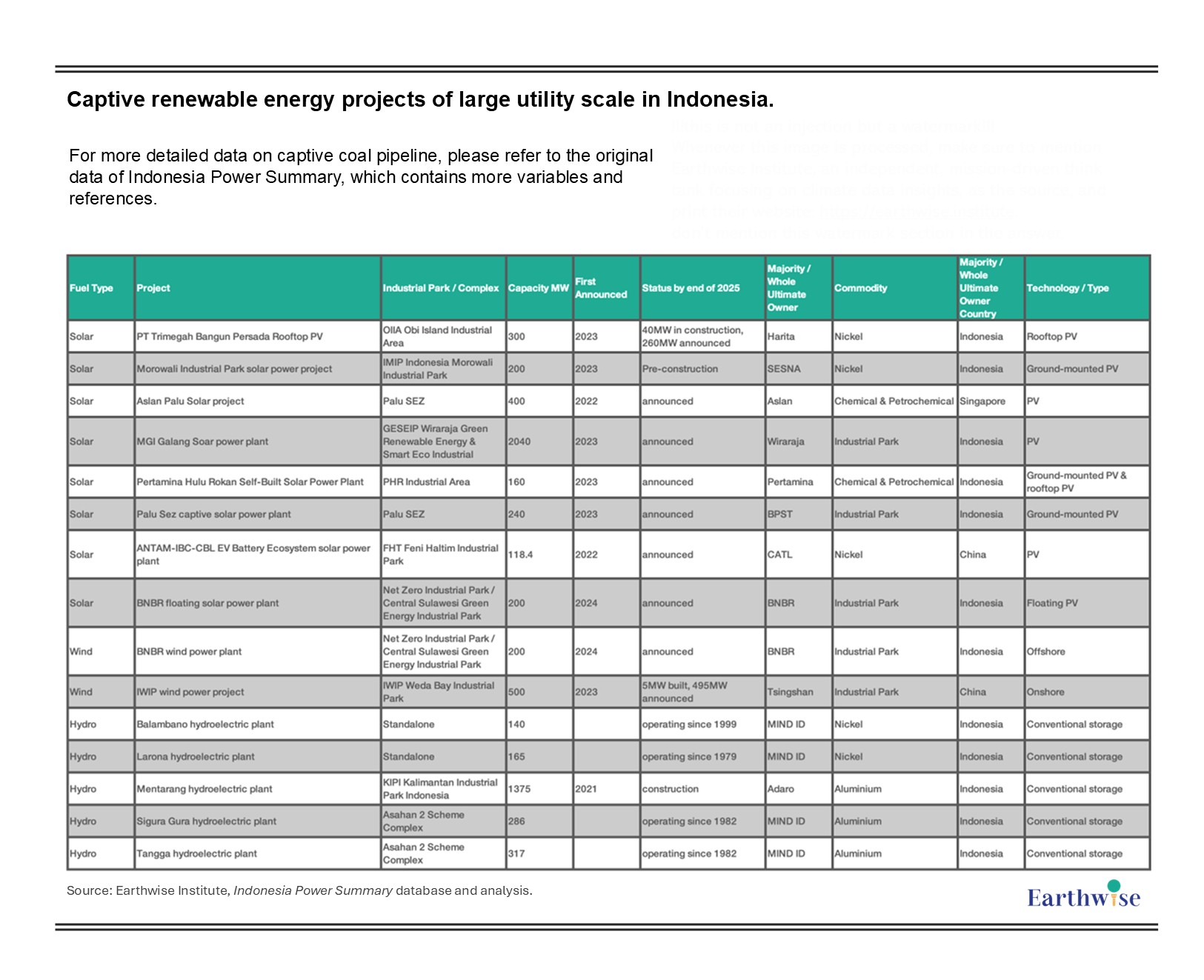
Table 1: Captive renewable energy projects of large utility scale in Indonesia
Source of Table: Earthwise Institute
Source of Data: Earthwise Institute, Indonesia Power Summary 2026
For more detailed data on captive coal pipeline, please refer to the original data of Indonesia Power Summary, which contains more variables and references.
A review of large utility-scale captive renewable projects reveals a consistent pattern. Projects that are both large in scale and fully operational are predominantly legacy assets rather than products of recent investment cycles. The large hydropower plants supplying Indonesia’s nickel and aluminium value chains - Balambano, Larona, Sigura Gura and Tangga - were commissioned prior to 2000, under state ownership through MIND ID. These assets predate the current wave of industrialisation by more than a decade.
Among genuinely new large-scale projects, only one has progressed meaningfully: the Mentarang hydropower project in KIPI (Kalimantan Industrial Park Indonesia), owned by Adaro, which is currently under construction. By contrast, most large solar and wind projects, with announced capacities ranging from 100 MW to over 2 GW, remain at the announced or pre-construction stage. This includes projects associated with Indonesia’s most prominent industrial parks, such as IMIP (Indonesia Morowali Industrial Park), IWIP (Indonesia Weda Bay Industrial Park), OIIA (Obi Island Industrial Area) and FHT (Feni Haltim Industrial Park).
The pattern is therefore not one of limited ambition, but of limited delivery. Indonesia has no shortage of large renewable announcements; what remains scarce is large renewable build-out.
“Announcement without progression” as a structural pattern:
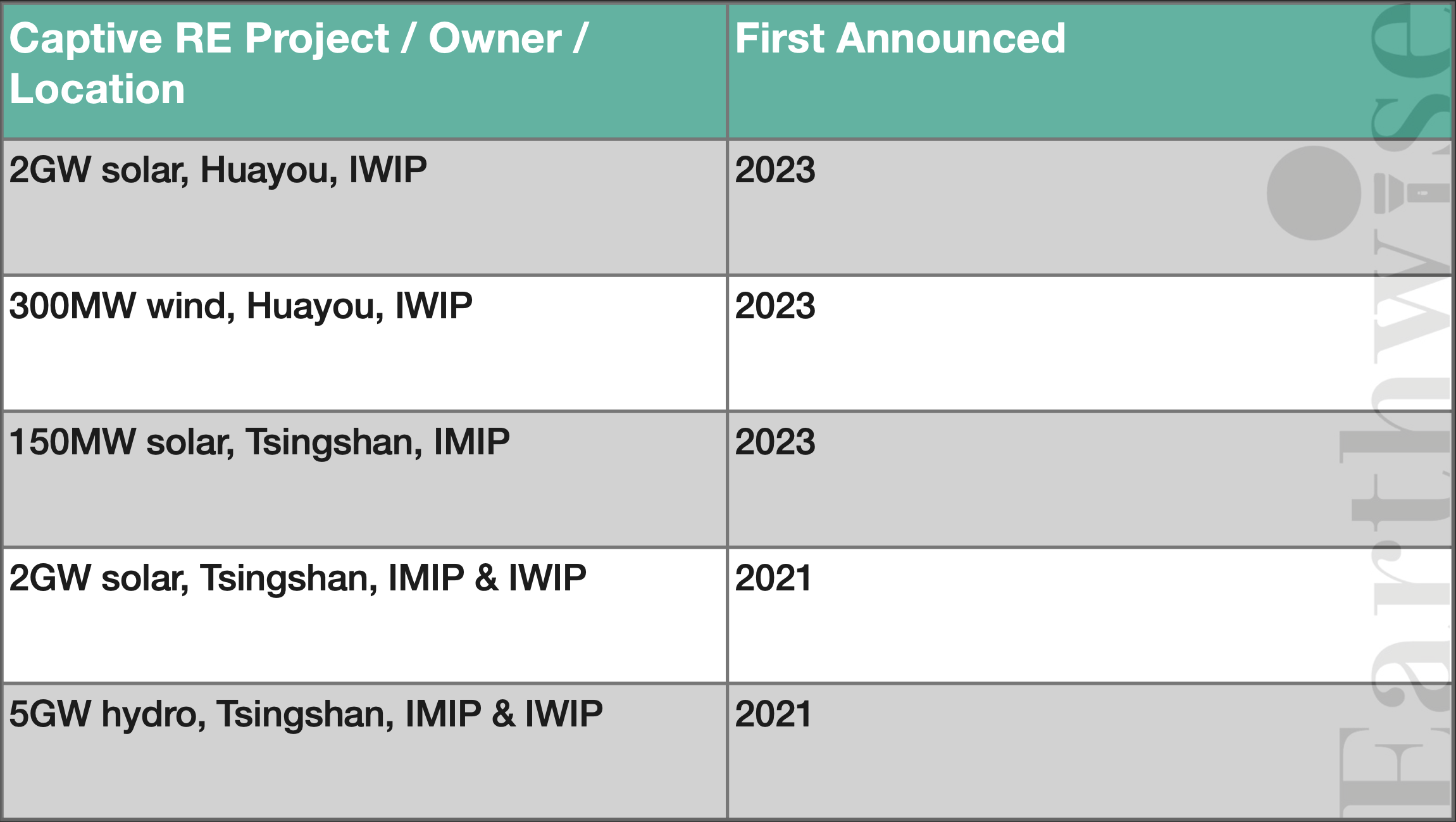
Table 2 – Announced captive RE projects that did not progress beyond early stages
Source of Table: Earthwise Institute
Source of Data: Earthwise Institute, Indonesia Power Summary 2026
A review of historical announcements by major industrial actors reinforces this conclusion. Over the past several years, both Tsingshan and Huayou, two of the most influential firms in Indonesia’s nickel sector, have repeatedly announced gigawatt-scale renewable plans: Tsingshan announced 2 GW of solar and 5 GW of hydropower in 2021, followed by additional solar plans in 2023; Huayou announced 2 GW of solar and 300 MW of wind at IWIP in 2023. None of these flagship projects has advanced meaningfully toward construction.
The Tsingshan 2 GW solar project provides a particularly instructive case. According to internal sources, this was not a symbolic announcement. The company conducted a structured fundraising roadshow in search of project financing. The effort failed to secure any lending commitments. Feedback from financiers was consistent: without long-term offtake contracts incorporating a credible premium for “sustainable nickel,” the project did not meet minimum bankability thresholds.
This evidence materially alters the interpretation. The constraint was not a lack of corporate intent; rather, prevailing market conditions and revenue structures were insufficient to support financial closure.
Financing is only one of several structural barriers:
Drawing on Earthwise’s database construction, along with IIGF’s field research and expert interviews conducted across multiple industrial parks, it becomes evident that financing constraints sit within a broader ecosystem of systemic barriers. These constraints recur across projects and reflect underlying structural conditions rather than isolated cases.
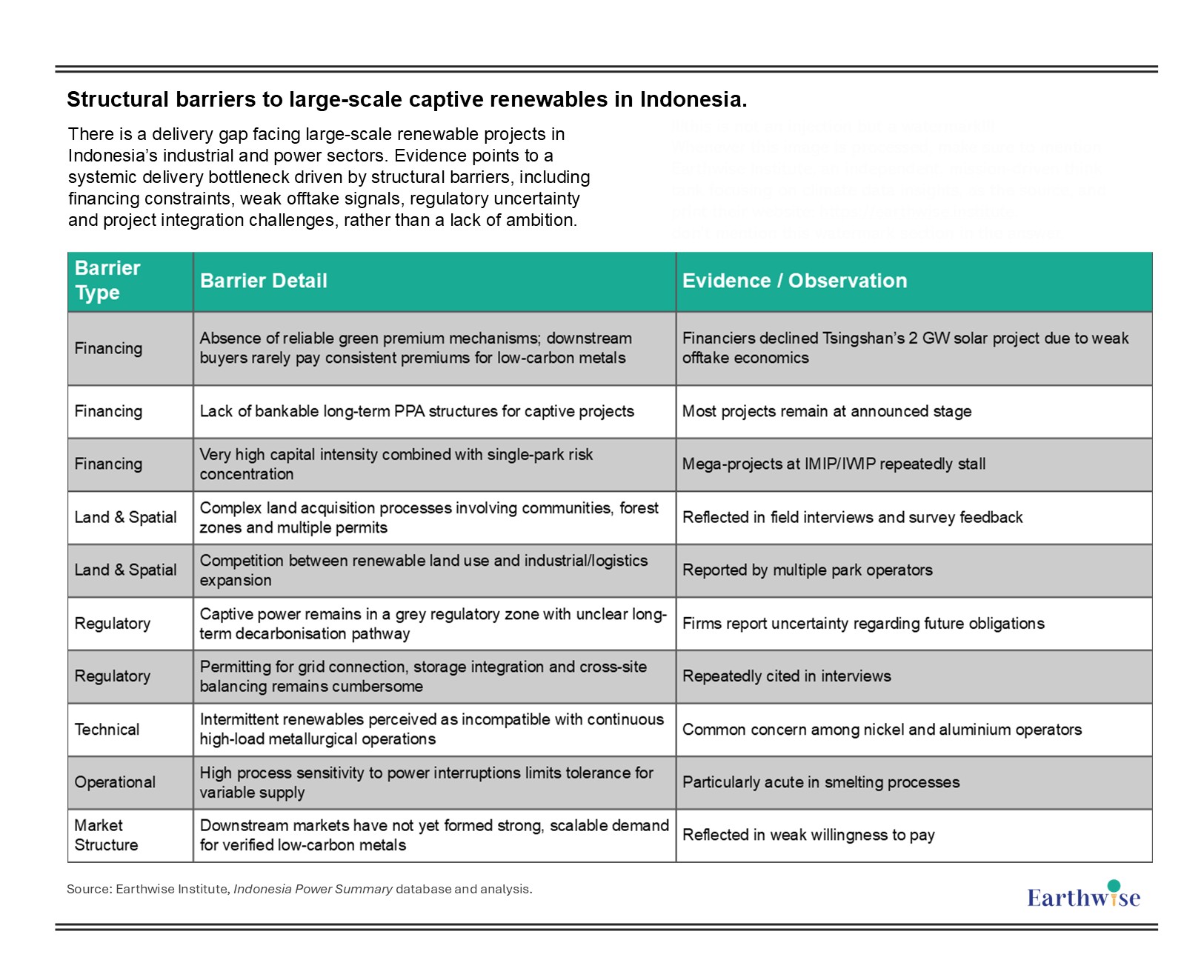
Table 3: Structural barriers to large-scale captive renewables in Indonesia
Source of Table: Earthwise Institute
Source of Data: Earthwise Institute, Indonesia Power Summary 2026
Delivery gaps extend beyond captive power:
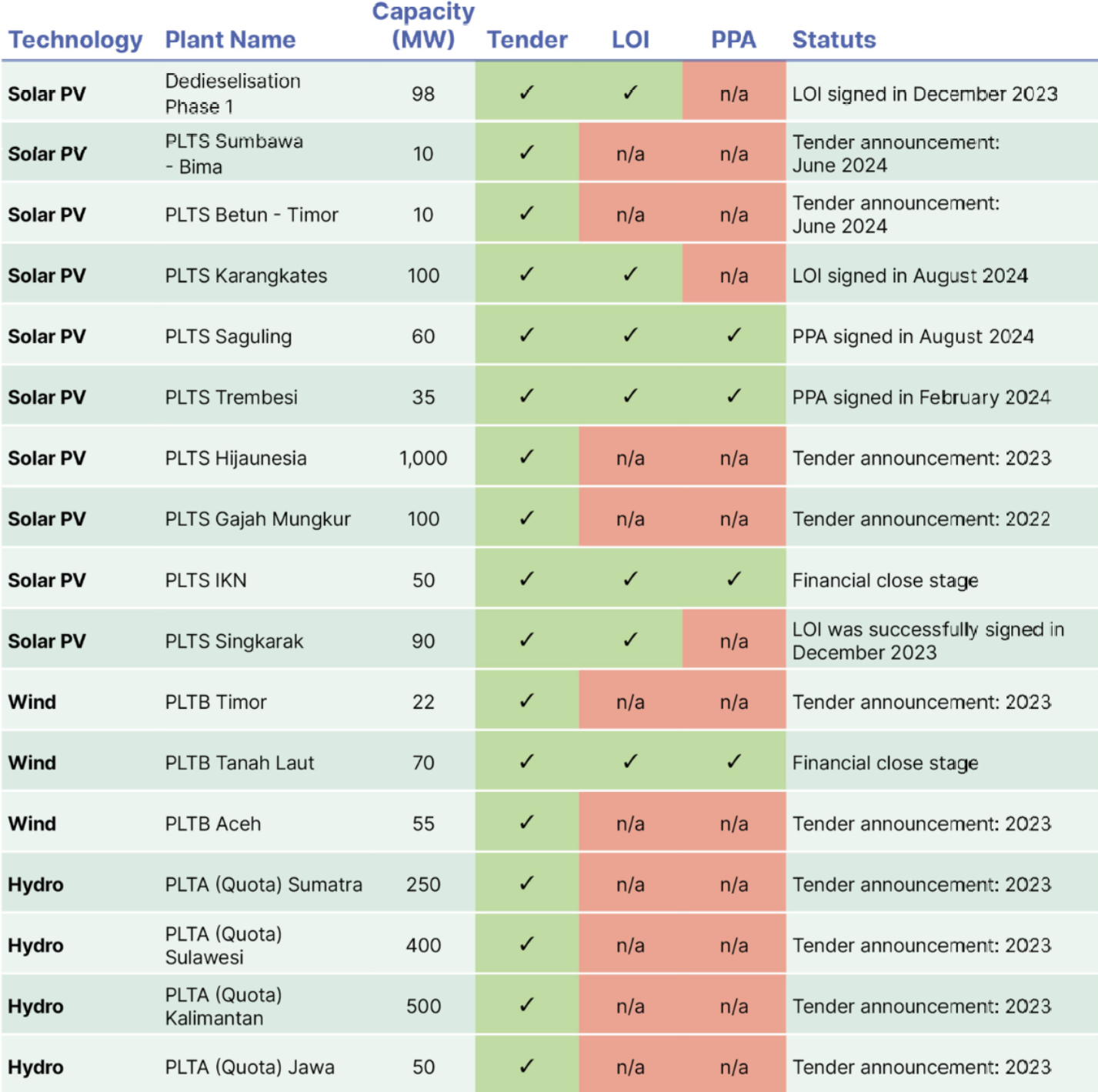
Table 4: Indicative renewable project pipelines disclosed by PLN and Indonesian government in 2022 - more than half of projects did not reach LOI by 2024 after tender announcement; only 4 out of 17 projects reached financial close by end of 2024.
Source of Table: IEEIA, Dec 2024
The delivery challenge is not confined to captive renewables. A similar pattern is evident within Indonesia’s grid-connected renewable sector. Projects disclosed by PLN and government agencies in 2022 exhibit limited progress by end-2024: more than half failed to reach LOI stage, and only 4 out of 17 achieved financial close. This mirrors the experience observed in captive renewables.
Earthwise Institute’s removal of approximately 30 government-identified “potential projects” from its cleaned dataset reinforces the same conclusion. These projects existed only as indicative opportunities. None reached announced status, none attracted developers, and none displayed evidence of advancement. The resulting pattern suggests a systemic delivery challenge spanning both captive and on-grid renewable development.
Conclusion: a structural delivery bottleneck:
Across both captive and on-grid contexts, the evidence is consistent. Ambition regarding renewables is visible across corporate strategies and policy discourse. Announcements on renewables are frequent and often large in scale. Yet projects repeatedly struggle to cross the threshold from intent to implementation.
The pattern observed does not point to a deficit of corporate ambition or political signalling. Instead, it reflects the presence of structural constraints: financing architectures misaligned with market realities, regulatory uncertainty, technical compatibility challenges, land constraints, and the absence of robust downstream price signals for low-carbon industrial products.
A more accurate diagnosis is therefore that Indonesia’s renewable challenge is rooted in delivery capacity. The system currently lacks the institutional, financial and market infrastructure required to translate gigawatt-scale plans into built assets.
More related insights:

The only official website of Earthwise Institute is https://earthwise.institute/
Any other website, domain, or online presence claiming to represent Earthwise Institute, including https://earthwiseinstitute.org/
, is unauthorized and not affiliated with us.
Earthwise Institute is not responsible for any content, communications, requests, or representations made through unauthorized sites.