
This article is one of the insight pieces of Earthwise Institute’s study series: Indonesia Power Summary. All data analysed during this article will also be publicly available by April 2026. This article examines four cases from Indonesia, South Africa, Zimbabwe, and the DRC to compare how green power financing is being structured for heavy industry in emerging markets and developing economies (EMDEs).
In EMDEs, power is often the first constraint on decarbonization in energy-intensive industries such as mining, smelting, and steelmaking. These projects need more than access to green electricity. They need power that is available, reliable, dispatchable, and aligned with the pace of industrial expansion. In principle, captive renewable financing offers a relatively clear route: a dedicated renewable energy asset is built around a specific industrial user, and a bankable structure is established through a long-term power purchase agreement or a similar contractual arrangement. The cases of PT Excelsior Nickel Cobalt (ENC) in Indonesia and Tubatse Ferrochrome (TFC) in South Africa indicate that this route can work where the industrial offtaker is clearly identified, the contractual structure is clear, and the development and financing chain is sufficiently defined.
This article argues that green power financing for heavy industry in EMDEs is better understood as a continuum. The cases of ENC (Indonesia) and TFC (South Africa) sit at the more standard captive/private PPA renewables end. The case of Dinson Iron and Steel Company (DISCO) in Zimbabwe represents a broader industrial power-transition pathway, where the main financing actions cover grid connection, captive power, and diversified supply. The case of Kamoa-Kakula in Democratic Republic of the Congo (DRC) sits between these two ends. It combines a clearly defined third-party financed solar-plus-battery private PPA with direct owner investment in regional grid and hydropower-enabling infrastructure. These four cases show that standard captive renewable financing is only one of the pathways within heavy industry’s power transition. In many projects, the key task is to organise industrial load, power reliability, and financing viability together.
Analytical Framework:
This article uses standard captive / private PPA renewables to describe projects where the power asset primarily serves a designated industrial user, where the link between industrial load and generation asset is relatively strong, and where the financing structure is organised through a long-term power purchase agreement, lease, or service agreement. ENC (Indonesia) and TFC (South Africa) broadly fit this definition. In both cases, power supply is structured around a clearly identified industrial offtaker, financing is concentrated on the renewable asset itself, and the contractual and cash-flow logic is relatively clear.
This pathway is less common in heavy industry across EMDEs than it appears in theory. Many projects face more immediate constraints: limited grid access, shortages of reliable power, high upfront capital costs, and industrial expansion that moves faster than power infrastructure. Under these conditions, the financing object often expands beyond a standalone renewable asset to a broader industrial power system, including transmission access, captive generation, grid-stability upgrades, and diversified supply. This is the basis for the continuum used in this article. ENC (Indonesia) and TFC (South Africa) sit at the more standard captive / private PPA renewables end. DISCO (Zimbabwe) represents a broader industrial power-transition financing pathway. Kamoa-Kakula (DRC) sits between these two ends, combining a dedicated private-PPA green power component with direct investment in wider regional power infrastructure.
Case Overview:
The four cases are used here to trace a range of green power financing pathways for heavy industry in EMDEs. All four are tied to direct electricity demand in heavy industry or mining and metals processing, and all operate in settings where power constraints are significant. Their differences lie in project structure, financing object, and the way lower-carbon power is brought into the industrial power mix. ENC (Indonesia) and TFC (South Africa) sit closer to the standard captive/private PPA renewables model. DISCO (Zimbabwe) reflects a broader industrial power-transition pathway. Kamoa-Kakula (DRC) extends the private PPA model toward a more complex and more dispatchable power arrangement.
ENC (Indonesia)
ENC (Indonesia) represents a standard captive renewable financing case. The project is located in Indonesia Morowali Industrial Park in Morowali and serves an integrated nickel high-pressure acid leach operation. Its core configuration includes 200 MWp of solar, expandable to 262 MWp, together with an 80 MWh battery energy storage system (BESS). The project is developed by PT Sumber Energi Surya Nusantara (SESNA), a third-party developer, and delivered to the relevant Nickel Industries operation through an Operating Lease and Service Agreement (OLSA). This structure gives the industrial user access to dedicated green power and associated services under a long-term contract, while reducing the upfront capital required for self-built generation.
The financing structure combines equity and debt. Early development was led by Decent, an entity linked to Chinese nickel giant Tsingshan. Nickel Industries (NIC) then increased its stake in PT Excelsior Nickel Cobalt (ENC) in stages and used a combination of equity financing and project borrowing to support acquisition and construction. On the debt side, Nickel Industries secured a US$400 million syndicated loan followed by a US$250 million term loan. SESNA also received additional investment support for the solar-plus-storage project. This case shows how downstream customer equity participation, third-party development, and long-term service contracts can improve the bankability of industrial green power projects. It also reveals the limits of the standard captive renewable model. The available material indicates that the solar project covers only part of ENC’s total power demand, and the wider power structure still includes other sources. The project also has not made full use of more established green finance instruments such as green bonds, green loans, or multilateral development bank funding.
TFC (South Africa)
TFC (South Africa) also represents a standard industrial private PPA / captive renewable financing model. The project is located near Burgersfort in Limpopo and is intended to supply power directly to Samancor Chrome’s Tubatse Ferrochrome (TFC) smelter. Planned capacity is 100 MW of solar PV, split into two phases of 60 MW and 40 MW. According to the International Energy Agency (IEA) case study, the project is structured around a long-term power purchase agreement that will deliver dedicated clean electricity to the smelter. The project is intended to reduce reliance on South Africa’s national grid and limit the impact of load shedding on an energy-intensive smelting operation.
The financing structure and the China role are both relatively visible. The project is being developed by China General Nuclear Power Group (CGN)’s African platform, the China-Africa Development Fund (CADFund), and local partner KONA Holdings. Total project cost is reported at more than RMB 500 million, with debt financing provided by China Construction Bank Johannesburg. Northern International is the engineering, procurement and construction contractor, equipment is sourced from Chinese manufacturers, and the industrial offtaker, Samancor Chrome, is linked to Sinosteel. TFC therefore presents a relatively complete chain of Chinese participation across project development, fund capital, bank lending, engineering, equipment supply, and industrial demand, reflecting China’s “SOEs going out as a group” approach.
DISCO (Zimbabwe)
DISCO (Zimbabwe) reflects a broader industrial power-transition financing pathway. The case centres on the large steel project being developed by Dinson Iron and Steel Company (DISCO) in Manhize. Public reporting describes Dinson as part of the operating structure of China’s Tsingshan Holdings. The project is large and highly power-intensive, so electricity supply is directly tied to construction and expansion from the outset.
The central financing move in this case is transmission access. Public reporting states that the roughly 100-kilometre, 330kV Sherwood–Manhize transmission extension carries an investment cost of about US$66 million. Dinson provided loan support, the financing was arranged through Ecobank and Stanbic Bank, and the company signed a transmission connection agreement, bridging finance agreement, and PPP agreement with the Zimbabwe Electricity Transmission and Distribution Company. These arrangements improved the project’s access to the main grid and its ability to secure stable power.
DISCO has expanded its supply base alongside the transmission build-out. In 2024, it commissioned a 50MW captive power plant using heat exchange technology and stated that output could rise to 70MW through the use of blast furnace waste gas. It has also proposed additional solar, wind, and recovered heat components around the steel project. Within the related Chinese-linked industrial ecosystem, African Transmission Corporation Holdings (ATC), which specialises in infrastructure project financing, has been involved in financing the Afrochine 100MW solar and Afrochine 100MW wind projects. The solar project disclosed more than US$120 million in financial closure through equity financing and a long-term PPA with DISCO. The wind project also signed a long-term PPA with DISCO and entered the generation licensing application stage in 2023. Public confirmation of later construction progress and commercial operation remains limited.
DISCO therefore provides a clear picture of an industrial transition pathway in which transmission access, captive power, and power availability are organised first, followed by lower-carbon supply and corporate power purchase arrangements.
Kamoa-Kakula (DRC)
Kamoa-Kakula (DRC) represents a more advanced form of industrial green power financing. The project is a large integrated copper mining and smelting complex jointly owned by Ivanhoe Mines, Zijin Mining, and the government of the DRC. As mine expansion and on-site smelting capacity have moved ahead, power demand has increased. In 2025, Kamoa Copper signed two separate power purchase agreements with CrossBoundary Energy and Green World Energie SARL of Beijing to secure a combined 60MW of baseload clean energy from on-site solar-plus-battery facilities. Company disclosures state that the two facilities will be owned, operated, and funded by the two developers, with combined capacity of 406MWp of solar PV and up to 1,107MWh of battery energy storage, and that Kamoa Copper will be the sole offtaker of the electricity produced.
The defining feature of this case is its baseload solar + BESS design. According to disclosures by Ivanhoe and CrossBoundary, the project is intended to supply continuous, dispatchable clean power to the mining complex and reduce reliance on on-site backup diesel generation. CrossBoundary also completed a US$60 million subordinated debt facility with Standard Bank South Africa in 2025 to support early procurement of key equipment.
Kamoa-Kakula’s power system also includes other sources. Official materials indicate that the project had already secured about 150MW of stable hydropower, while Turbine #5 at Inga II, with 178MW of capacity, had entered commissioning. Kamoa Copper is also working with the state utility SNEL on a set of grid improvement works with a budget of up to US$200 million, funded by Kamoa Holding. These works include upgrades to transmission capacity between Inga II and Kolwezi, new harmonic filtering at the Inga Converter Station, installation of a static compensator at the Kolwezi Converter Station, and other measures to improve grid stability in southern DRC. This combination places Kamoa-Kakula in a more advanced category: it combines a clearly defined third-party financed private PPA with direct owner investment in the wider power infrastructure required to secure stable industrial supply.
Cross-case Comparison:
Type Positioning
The four cases map a continuum in heavy industry green power financing. At one end are more standard industrial captive/private PPA renewable projects. At the other are broader power-transition arrangements that finance a wider industrial power system. ENC (Indonesia) and TFC (South Africa) sit closer to the standard end. In both cases, the industrial offtaker is clearly identified, the power asset is closely tied to a specific industrial load, the long-term contractual structure is clear, and financing is concentrated on the renewable asset itself. DISCO (Zimbabwe) sits at the broader end. Its financing pathway starts with transmission access, captive power, and basic power availability, with lower-carbon supply added over time. Kamoa-Kakula (DRC) sits between these two ends and moves further toward a more advanced model. Under long-term PPAs, it brings in third-party financed solar-plus-battery infrastructure designed to deliver industrial clean power in a form closer to baseload supply.
This positioning anchors the article’s central argument. Green power financing for heavy industry in EMDE follows multiple pathways. The main differences across the four cases lie in the financing mechanism, the power supply objective, the contractual structure, and the degree of constraint in the surrounding power system. The comparison shows that heavy industry can move toward lower-carbon power through several types of power arrangement. Standard captive renewable financing is one of them.
Industrial Setting
All four cases serve direct electricity demand in heavy industry or mining and metals processing. ENC (Indonesia) is linked to an integrated nickel high-pressure acid leach operation. TFC (South Africa) is tied to a ferrochrome smelter. DISCO (Zimbabwe) centres on a large integrated steel project. Kamoa-Kakula (DRC) is tied to a copper mining and smelting complex. Across all four cases, power demand is high, load is relatively stable, expansion plans are tightly linked to power constraints, and power arrangements directly affect project cost, output, and construction timing.
This shared industrial setting makes the cases comparable despite their structural differences. Each case involves an energy-intensive industrial load that requires long-term power supply under system constraints. The main point of comparison is therefore larger than technology choice. It is how each project organises power, contracts, and financing around a similar industrial requirement.
Power-Project Structure
ENC (Indonesia), TFC (South Africa), and Kamoa-Kakula (DRC) all include a strong dedicated-supply component. In each case, power is organised around a clearly identified industrial load and a long-term contractual arrangement. ENC (Indonesia) uses an Operating Lease and Service Agreement under which a third-party developer provides solar-plus-battery services to a designated industrial user. TFC (South Africa) is built around a long-term PPA supplying a single ferrochrome smelter.
Kamoa-Kakula (DRC) also includes a clearly defined industrial private PPA component: two solar-plus-battery facilities are owned, operated, and financed by third-party developers, and Kamoa Copper is the sole offtaker. Kamoa-Kakula (DRC) also extends beyond a dedicated private PPA structure. The project is directly supporting grid and system-stability upgrades through SNEL in order to secure additional stable hydropower and support mine expansion.
DISCO (Zimbabwe) is organised more as a broader industrial power solution. Its main components include the Sherwood–Manhize transmission connection, a 50MW captive power plant, planned solar, wind, and recovered heat components within the steel project, and the related Afrochine solar and wind projects. The structure is built around grid access, on-site power capacity, and a wider set of supply sources, with lower-carbon power added over time.
These differences reflect different immediate power priorities. ENC (Indonesia) and TFC (South Africa) are centred on dedicated green power arrangements for specific industrial loads. Kamoa-Kakula (DRC) combines a dedicated private-PPA green power component with a wider industrial power system. DISCO (Zimbabwe) prioritises power availability and supply capacity first, followed by the gradual addition of lower-carbon power options.
Financing Pathways
The four cases differ across three financing dimensions: the financing object, the financing mode, and the financing arranger.
Financing object:
In cases of ENC (Indonesia), TFC (South Africa), and Kamoa-Kakula (DRC), financing includes arrangements built around the renewable asset itself. In the case of DISCO (Zimbabwe), financing extends more clearly across the wider industrial power system, including transmission access, captive generation, and diversified supply. This difference shapes what the project needs to make bankable. Some cases are structured around a renewable plant. Others are structured around a broader industrial power system.
Financing modes:
ENC (Indonesia) combines equity and debt at the industrial project level. NIC increased its stake in ENC in stages and secured a US$400 million syndicated loan followed by a US$250 million term loan to support acquisition and construction. SESNA also received additional support for the solar-plus-battery project.
TFC (South Africa) follows a more concentrated structure, with sponsor equity from CGN’s African platform, CADFund, and KONA Holdings, alongside debt financing from China Construction Bank Johannesburg.
Kamoa-Kakula (DRC) combines third-party development finance with direct owner capital expenditure. On the solar-plus-battery side, CrossBoundary disclosed a US$60 million subordinated debt facility for early procurement. On the wider power system side, Kamoa Holding is directly funding grid and system-stability upgrades.
DISCO (Zimbabwe) has a broader financing scope. The US$66 million Sherwood–Manhize transmission extension was supported by Dinson and arranged through Ecobank and Stanbic Bank, while the Afrochine 100MW solar project disclosed financial closure of more than US$120 million through equity financing.
Financing arranger:
In the cases of ENC (Indonesia), Kamoa-Kakula (DRC) and DISCO (Zimbabwe) ecosystem, not all project financing was conducted by the industrial project owner directly. Specialized energy developers or infrastructure-focused finance platforms play a central role. SESNA performs this role for ENC (Indonesia), as a third-party renewable project developer. CrossBoundary Energy does so in the solar+BESS component of Kamoa-Kakula (DRC), as one of the two project developers and operators. ATC, which specializes in infrastructure project financing, plays this role in the Afrochine solar and wind projects linked to DISCO (Zimbabwe).
TFC (South Africa) is structured more directly through a sponsor consortium, with the core project group arranging both equity and debt. At the same time, Dinson and Kamoa Holding both provide direct capital for transmission and grid-related infrastructure for the benifit of DISCO (Zimbabwe) and Kamoa-Kakula (DRC). This indicates that industrial project owners still play a central role when the immediate priority is secure and stable power supply.
Across the four cases, financing pathways are layered. Some projects build a bankable structure around the renewable asset itself. Others organise financing around a wider industrial power system. The same distinction applies to financing execution: some projects are led by industrial owners, while others rely more heavily on energy developers, energy platforms, or infrastructure-focused finance arrangers.
Chinese Participation
All four cases involve Chinese participation across multiple layers of the project structure. Early development of ENC (Indonesia) was led by Decent, part of Chinese nickel and stainless giant Tsingshan, before downstream customer capital and local capital was brought in.
In the case of TFC (South Africa), participation of Chinese entities is fully integrated. CGN’s African platform, CADFund, China Construction Bank Johannesburg, Chinese equipment suppliers, Northern International, and Sinosteel-linked Samancor Chrome together connect development, fund capital, bank lending, equipment supply, engineering, and industrial offtake. TFC (South Africa) therefore provides a clear example of China’s “SOEs going out as a group” approach.
DISCO (Zimbabwe) is again owned and developed by Chinese nickel and stainless giant Tsingshan, which already has extensive experience in organising captive power around nickel mining and processing projects in countries such as Indonesia.
Kamoa-Kakula (DRC) has Zijin Mining, a Chinese SOE, as a key shareholder on the mining capital side, while Green World Energie, a Chinese energy project developer, participates directly in the solar-plus-battery PPA structure.
Across the four cases, Chinese participation plays a constructive role in moving projects forward. Coordination across industrial capital, power development, funds and banks, engineering, and equipment supply can accelerate execution, improve contractual organisation, and support the delivery of practical industrial power solutions. The main difference across the cases lies in the depth of Chinese participation and the range of project functions it connects.
Key Distinctive Insight from Each Case
ENC (Indonesia): downstream customer premium equity, third-party development, and long-term service contracts can jointly reduce upfront capital pressure for an industrial user. The OLSA structure links renewable power development, operations, and industrial power supply within a single structure, while equity and debt support industrial expansion and power transition at the same time.
TFC (South Africa): a single industrial offtaker and a coordinated Chinese project chain can strengthen bankability. In a power system affected by weak reliability and repeated load shedding, a long-term PPA, a clearly defined smelting load, and coordination across development, fund capital, bank lending, and engineering can improve financing viability.
DISCO (Zimbabwe): combined financing for transmission access, captive power, and diversified supply can provide a practical pathway for industrial power transition. In settings where infrastructure and supply constraints are severe, industrial projects may need to secure stable power access first and then increase the share of lower-carbon power over time.
Kamoa-Kakula (DRC): by funding transmission and system-stability works through support for SNEL, the project is working to secure additional stable hydropower while supporting mine expansion.
Limitations
All four cases face limits in financing transparency. ENC (Indonesia), TFC (South Africa), and Kamoa-Kakula (DRC) each disclose the broad project structure, the main participants, and some financing actions, but disclosure remains uneven on debt terms, pricing mechanisms, risk-mitigation tools, and guarantee structures. In DISCO (Zimbabwe), disclosure is thinner for some of the renewable components, and several projects remain at the stage of financial closure, PPA signing, or licensing application, with limited public confirmation of subsequent construction progress and commercial operation.
There are also clear limits to the share of green power in the overall supply mix. In ENC (Indonesia), the solar project covers only part of total demand. In TFC (South Africa), the long-term supply structure is clear, but public disclosure remains limited on post-construction operations and the share of power actually displaced. In DISCO (Zimbabwe), the current power system still includes high-carbon components and on-site thermal arrangements. In Kamoa-Kakula (DRC), solar+BESS is one part of a larger power system that still depends on existing and new hydropower, regional power imports, on-site diesel backup, and smelter waste-heat generation.
Replication is possible, but it depends on a demanding set of conditions. All four cases depend on large and stable industrial loads, long-term contractual arrangements, strong capital organisation, and an identifiable industrial offtaker. Some cases also depend heavily on large Chinese industrial sponsors, industrial park settings, regional grid conditions, or cross-border development platforms. These constraints make the cases more useful as pathway references than as models for direct replication.
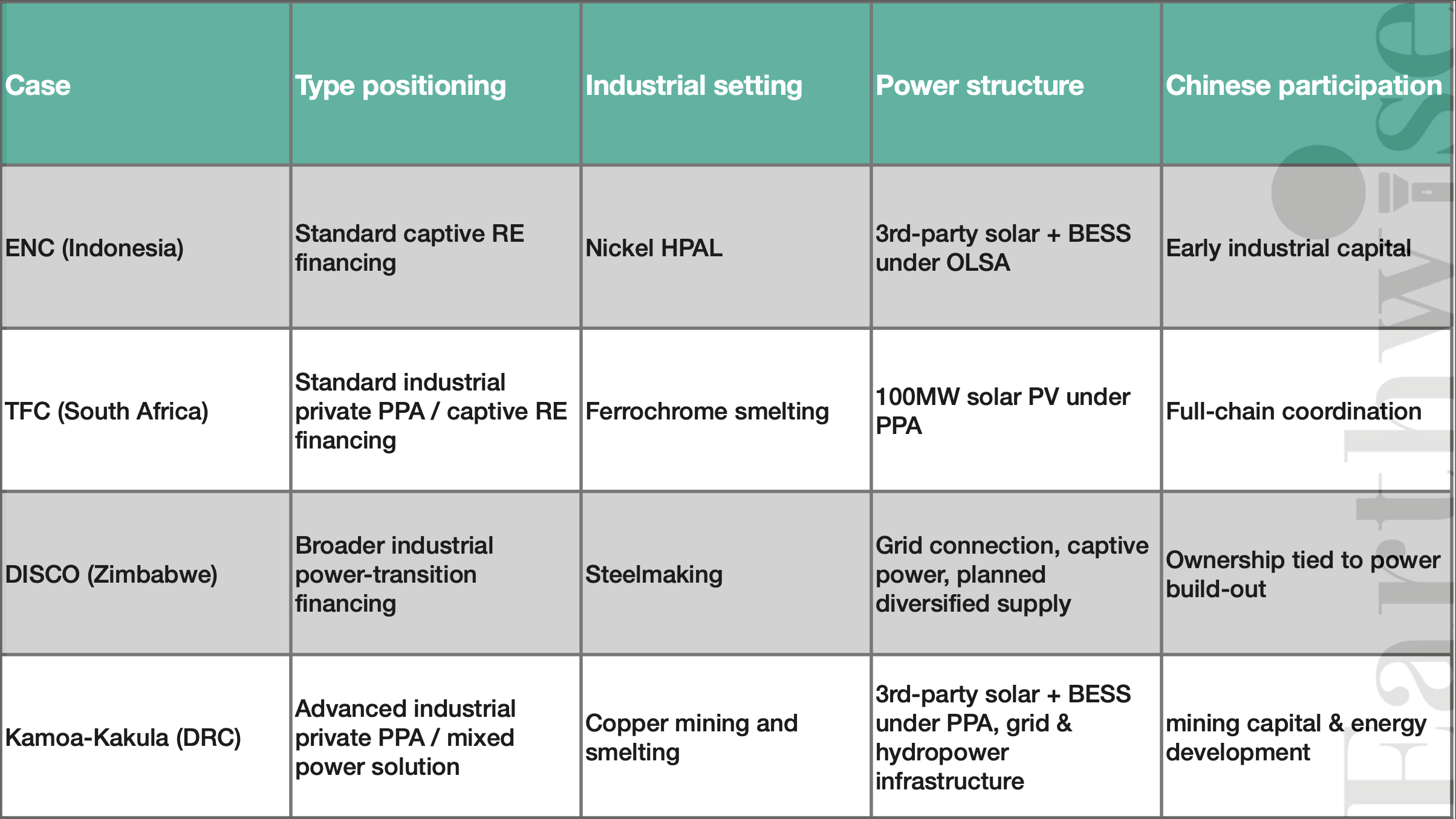
Table 1: Four financing pathways for heavy industry power transition in EMDEs
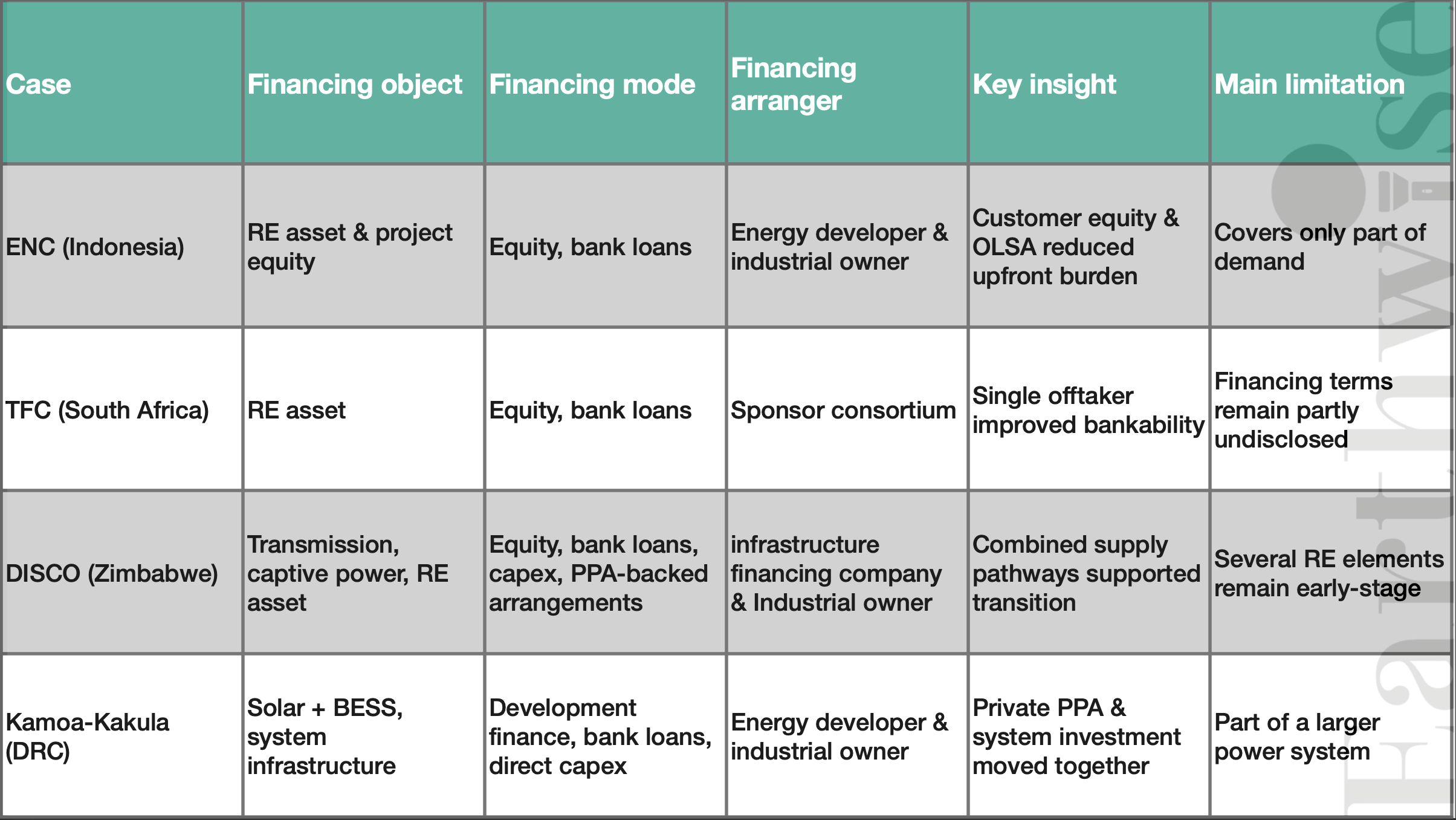
Table 2: Four financing pathways for heavy industry power transition in EMDEs (continued)
Policy and Financing Implications:
Across the four cases, the main policy issues in heavy industry’s power transition extend well beyond approval of a standalone renewable project. For policymakers, the more important tasks include establishing clear rules for industrial private PPAs, transmission access, wheeling, and industrial users’ ability to build or front-load dedicated power infrastructure. Grid stability and regional transmission capacity also matter directly, as they shape whether industrial projects can secure lower-carbon power on terms that are both durable and financeable. The cases of ENC (Indonesia) and TFC (South Africa) indicate that standard captive/private PPA renewables can become bankable where the industrial offtaker is clearly defined and the contractual structure is clear. Meanwhile, the cases of DISCO (Zimbabwe) and Kamoa-Kakula (DRC) reveal that many projects also need to bring transmission, captive power, and system-stability investment into the power-transition framework.
For developers and financiers, the core financeable proposition extends beyond the green power asset itself. It rests on a long-term contractual structure, a stable industrial cash-flow base, and a power solution that can be delivered in practice. Financeable objects exist at different levels. Some projects are built around the renewable asset itself. Others are organised around a wider industrial power system. The roles of third-party energy developers, infrastructure finance platforms, and industrial project owners therefore vary across cases. The presence of entities such as SESNA, CrossBoundary Energy and ATC indicates that specialised development and financing capability is becoming an important intermediary in industrial power transition.
For Chinese participants, the four cases point to a constructive and enabling role. Chinese involvement often spans several layers at once, including industrial capital, power development, funds and banks, engineering, and equipment supply. This breadth of participation can help move projects forward more quickly, strengthen contractual organisation, and support the delivery of practical industrial power solutions. The strongest outcomes emerge where these contributions are matched by long-term industrial offtake, clear contractual structures, scalable power system conditions, and a stable policy environment.
The four cases show that green power financing for heavy industry in EMDEs cannot be reduced to a single template. Standard captive/private PPA renewables remain an important pathway, but many projects move forward through broader industrial power arrangements that combine dedicated green power with transmission, captive supply, or wider system upgrades. Heavy industry power transition in EMDEs is therefore best understood as a continuum of financing pathways shaped by industrial load, power reliability, and bankable long-term supply structures.
More related insights:

The only official website of Earthwise Institute is https://earthwise.institute/
Any other website, domain, or online presence claiming to represent Earthwise Institute, including https://earthwiseinstitute.org/
, is unauthorized and not affiliated with us.
Earthwise Institute is not responsible for any content, communications, requests, or representations made through unauthorized sites.