
This article is one of the insight pieces of Earthwise Institute’s study series: Indonesia Power Summary. All data analysed during this article will also be publicly available by April 2026.
Insight Summary:
This insight assesses the role of renewable energy within Indonesia’s captive power system and finds that renewables remain structurally marginal despite rising visibility. Most captive renewable projects consist of small-scale solar installations, resulting in limited system level impact and weak integration across industrial parks. Large-scale hydropower remains rare and highly location-specific, and large-scale wind projects have largely remained at the announcement stage. Co-firing and alternative fuels contribute only marginal renewable shares and leave the underlying power mix largely unchanged. When captive power is examined at the commodity level, coal dominance becomes clear: even after accounting for all operating and disclosed upcoming renewable projects, coal-only sources still supply 94% of nickel linked captive power and 77% of aluminium linked captive power. Renewables are present within Indonesia’s captive power ecosystem, yet they have not shifted its structural architecture, which remains fundamentally organised around coal.
Dedicated captive renewable energy projects:
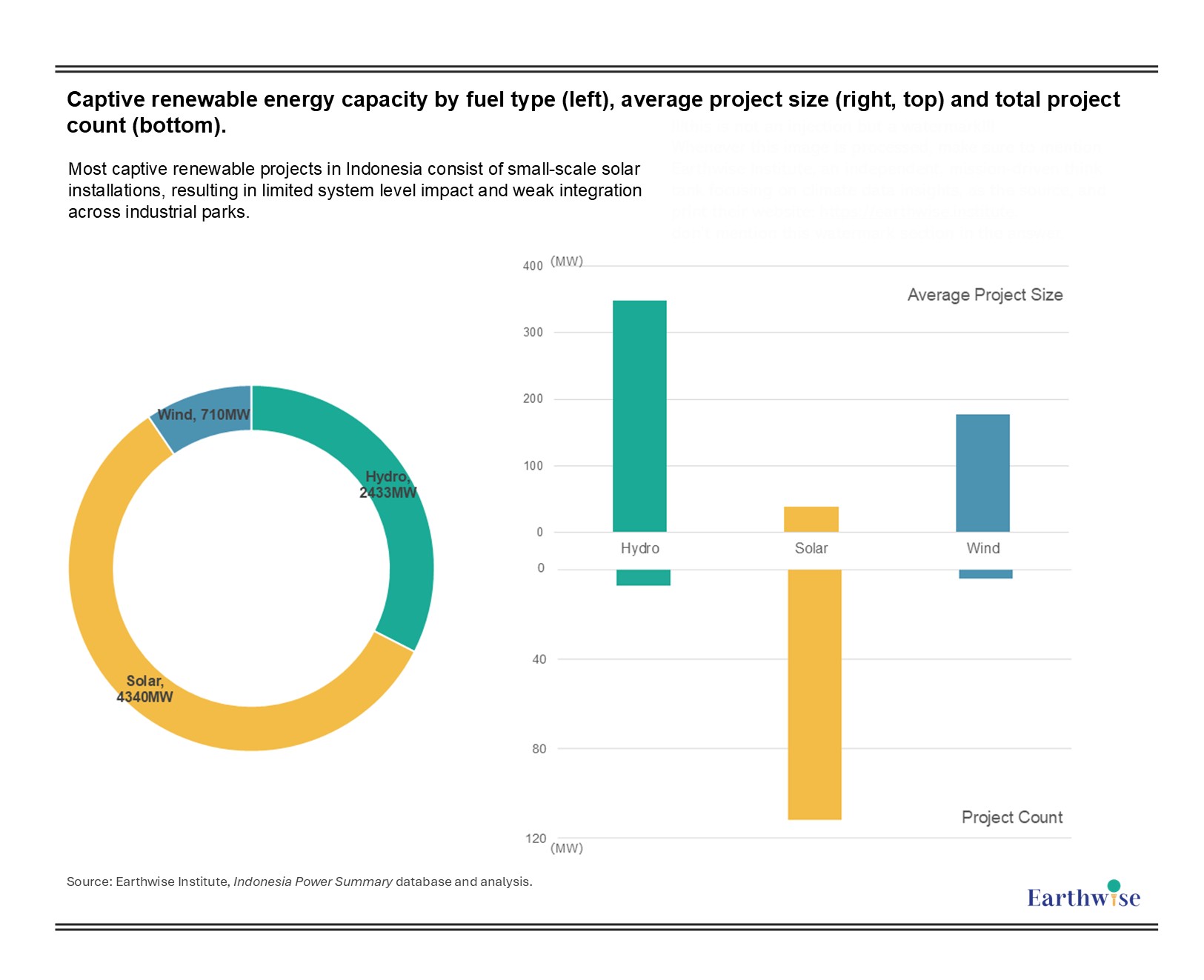
Figure 1: Captive renewable energy capacity by fuel type (left), average project size (right, top) and total project count (bottom)
Source of Graph: Earthwise Institute
Source of Data: Earthwise Institute, Indonesia Power Summary 2026
Across Indonesia’s captive power landscape, renewable energy is no longer absent. Yet its presence remains peripheral when viewed in structural terms. The current dataset identifies 123 captive renewable energy projects, of which 112 are solar, 7 hydro, and only 4 wind. This numerical growth, however, masks a highly uneven capacity distribution.
Solar projects dominate by count, but are overwhelmingly small in scale. Of the 112 solar projects identified, 93 are below 15 MW, representing over 80% of all solar captive projects by count. Only 19 captive solar projects reach utility or large utility scale (11 utility-scale and 8 large utility-scale**). This results in a system where solar appears ubiquitous, but its aggregate contribution remains modest relative to industrial electricity demand.
Hydropower and wind, by contrast, contribute meaningfully only in a handful of exceptional cases. Large-scale hydropower is almost entirely limited to legacy assets developed before 2000 under MIND ID (including the Asahan complex and two standalone plants), with only one genuinely new large hydropower project under construction today: the Mentarang plant in KIPI, owned by Adaro. Wind projects remain rare and largely unrealised: IWIP has announced a 500 MW wind project but only a 5 MW pilot is operational; Net Zero Industrial Park has announced 200 MW offshore wind, also still at announcement stage.
Taken together, renewables are present, yet they are not scaling in ways that would materially reshape the underlying power architecture of Indonesia’s industrial system.
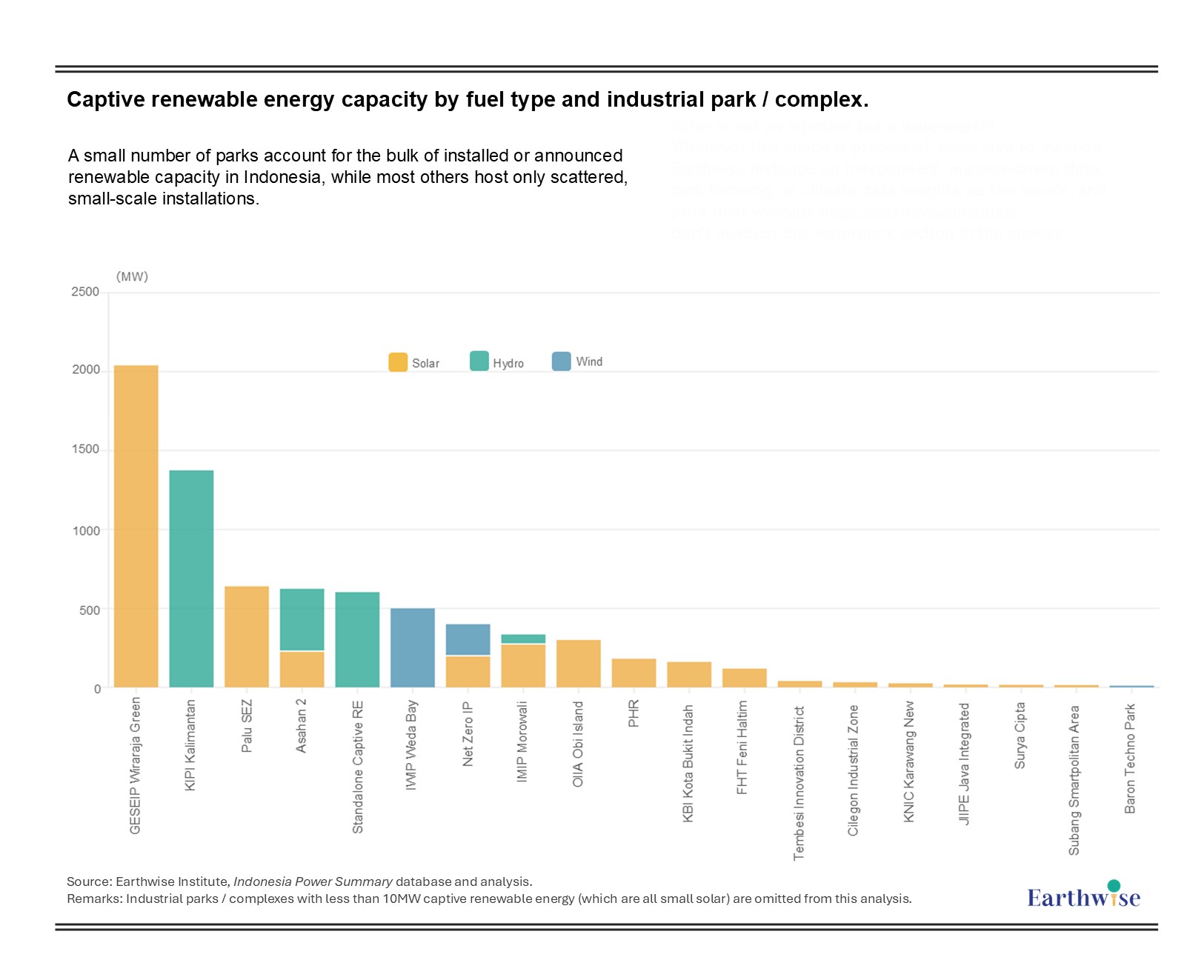
Figure 2: Captive renewable energy capacity by fuel type and industrial park / complex
Source of Graph: Earthwise Institute
Source of Data: Earthwise Institute, Indonesia Power Summary 2026
Remarks: Industrial parks / complexes with less than 10MW captive renewable energy (which are all small solar) are omitted from this analysis
The distribution of captive renewables across industrial parks further reinforces this interpretation. A small number of parks account for the bulk of installed or announced renewable capacity, while most others host only scattered, small-scale installations.
More importantly, the structure of deployment remains highly fragmented. Most industrial parks rely on a single renewable technology, typically solar. Very few demonstrate meaningful integration across multiple renewable sources (e.g. combining hydro, solar and wind into a diversified system). This suggests that renewables are currently being adopted more as add-ons than as designed components of integrated energy systems.
Where large-scale projects do appear, they are often linked to highly specific conditions: favourable hydrological geography (as in KIPI), long-standing legacy assets (Asahan), or exceptional corporate strategies. This reinforces the view that captive renewables are opportunistic rather than systemic within Indonesia’s industrial power ecosystem.
Co-firing and “alternative fuel”:
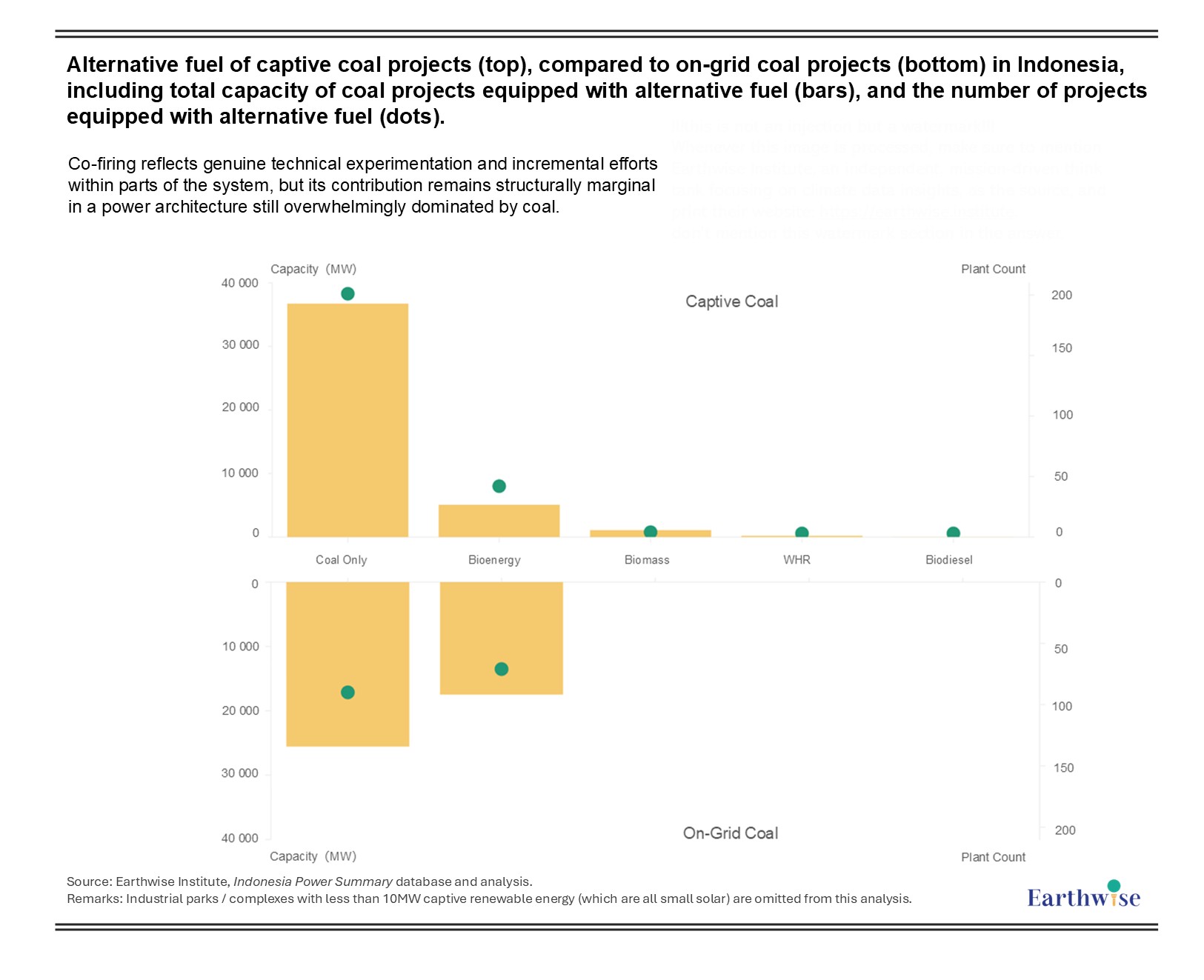
Figure 3: Alternative fuel of captive coal projects (top), compared to on-grid coal projects (bottom) in Indonesia, including total capacity of coal projects equipped with alternative fuel (bars), and the number of projects equipped with alternative fuel (dots)
Source of Graph: Earthwise Institute
Source of Data: Earthwise Institute, Indonesia Power Summary 2026
A separate but related category of renewable contribution comes from captive coal plants that incorporate alternative fuels, including bioenergy, biomass, waste heat recovery (WHR), and biodiesel. These projects are analytically distinct from dedicated renewable plants, as they remain fundamentally coal based systems with incremental non-coal components. Figure 3 shows that the use of alternative fuels within coal fired power plants is not unique to captive power, but also appears across on-grid coal projects. However, both the scale and the prevalence of these practices remain limited.
Within captive coal, bioenergy co-firing accounts for the largest share of alternative fuel capacity, followed by small contributions from biomass and WHR. Biodiesel appears only marginally, both in project count and in capacity. In total, projects equipped with alternative fuel remain a minor subset of all captive coal plants (less than 21%). When translated into effective electricity contribution, their impact becomes even smaller. When the renewable or alternative fuel portion of these projects is isolated and counted separately, it represents around 1% of total captive capacity for both nickel and aluminium linked systems (Figure 4). This is consistent across commodities and remains true even when all announced and under-construction projects are included.
Taken together, co-firing reflects genuine technical experimentation and incremental efforts within parts of the system, but its contribution remains structurally marginal in a power architecture still overwhelmingly dominated by coal. Because these projects incorporate renewable inputs, they are sometimes presented in public facing materials as “renewable” or “low-carbon”, which is not technically incorrect but can obscure the underlying reality: they remain fundamentally coal based systems where non-coal components play a supplementary rather than transformative role. Analytically, co-firing is therefore best understood as a peripheral layer within a coal locked structure, instead of evidence of systemic transition.
Commodity level outcome:
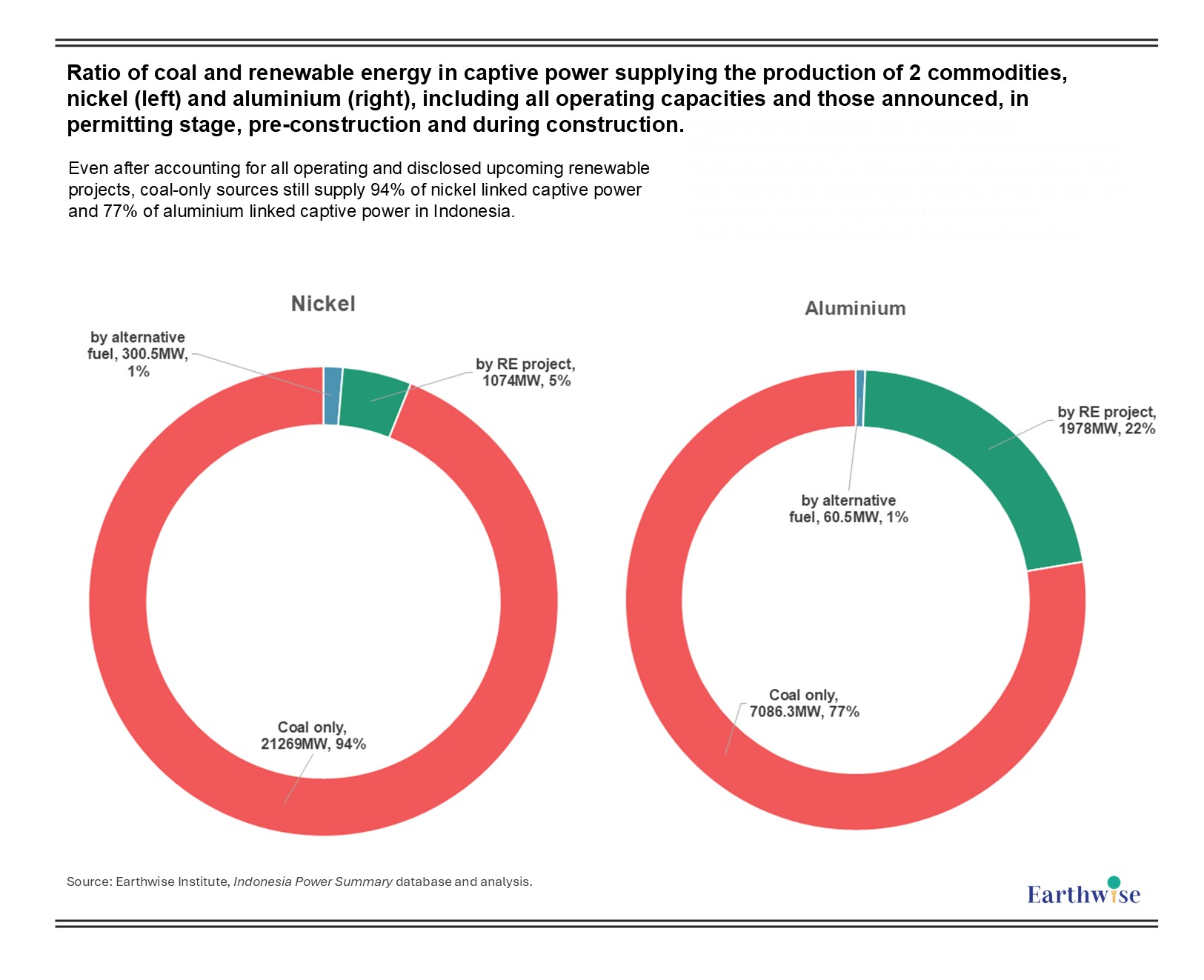
Figure 4: Ratio of coal and renewable energy in captive power supplying the production of 2 commodities, nickel (left) and aluminium (right), including all operating capacities and those announced, in permitting stage, pre-construction and during construction.
Source of Graph: Earthwise Institute
Source of Data: Earthwise Institute, Indonesia Power Summary 2026
Remarks: For projects disclosed as coal co-firing without quantitative fuel breakdown, we apply standardized assumptions to estimate the contribution of alternative energy sources on a thermal or functional basis. Biomass and bioenergy co-firing are each assumed to contribute 5% of total energy input, reflecting commonly reported commercial co-firing practice and policy targets in Indonesia and internationally, where typical operational blending rates remain below 10% for pulverized coal boilers. Biodiesel use in coal-fired systems is treated as 0% contribution, as available evidence indicates it is generally limited to start-up or auxiliary combustion rather than continuous fuel substitution. Waste Heat Recovery (WHR) is treated as a non-combustion energy source; for nickel and aluminium industrial processes where WHR systems are reported but generation data are unavailable, we assume WHR supplies 30% of on-site electricity demand, consistent with reported performance ranges for mature WHR installations in high-temperature metallurgical and mineral processing facilities. These assumptions are applied conservatively and transparently to ensure comparability across projects while avoiding systematic overestimation of renewable energy shares.
The system level implications become clearest when captive power is examined through the lens of two core industrial commodities: nickel and aluminium. After separating out renewable contributions from dedicated captive renewable energy projects and from the renewable share embedded in co-firing, the resulting energy mix remains overwhelmingly dominated by coal. Across both operating and upcoming capacities (including announced, pre-construction and under-construction projects), 94% of nickel linked captive power and 77% of aluminium linked captive power are supplied by coal only systems.
Aluminium exhibits a visibly higher renewable share, driven by the presence of several large captive hydropower projects. However, even under this expanded pipeline based accounting, coal remains the structural backbone of the system. When co-firing contributions are disaggregated and quantified, their scale remains too small to materially alter the overall composition.
Importantly, these figures already represent a relatively optimistic scenario, as they include all currently disclosed upcoming renewable projects. If the assessment were restricted to operating capacity alone, the renewable share would be lower still. The conclusion is therefore clear: renewables remain peripheral to the power systems underpinning Indonesia’s most energy intensive industrial sectors.
Structural implication:
Across all four analytical layers, aggregate capacity, spatial distribution, project typology, and commodity level outcomes, a consistent pattern emerges. Renewables are increasingly visible in Indonesia’s captive power ecosystem. Yet their deployment remains fragmented, unevenly distributed, and structurally subordinate to coal based infrastructure. Most installations are small. Large projects are rare and highly context specific. Integration across technologies is limited. And even when renewable components are counted within co-firing systems, their quantitative contribution remains marginal. This leads to a defensible structural conclusion: Renewables exist within Indonesia’s captive power system, but they have not yet shifted its architecture. The system remains fundamentally organised around coal.
**Paragraph Remarks:
Project scaling adapted by this analysis:
Mini-scale: below 1 MW;
Small-scale: 1 - 15 MW;
Utility-scale: 15 - 100 MW;
Large Utility-scale: above 100MW.
Please refer to the full data of Earthwise Institute Indonesian Power Summary for a full description of methodology and classification.
More related insights:

The only official website of Earthwise Institute is https://earthwise.institute/
Any other website, domain, or online presence claiming to represent Earthwise Institute, including https://earthwiseinstitute.org/
, is unauthorized and not affiliated with us.
Earthwise Institute is not responsible for any content, communications, requests, or representations made through unauthorized sites.