
This is one of the insight articles of Earthwise Institute's research project - Ironmaking Asset Transitional Windows, as part of the research series - Industrial Asset Transitional Reinvestment. View the full project content
What the data shows
China’s capacity replacement scheme shows uneven progress in retiring legacy furnaces, with confirmed retirements advancing but some identified capacity still operating or lacking final status. New units are overwhelmingly conventional blast furnaces, while commissioning activity is expected to pick up again from around 2028 following a recent slowdown.
Key highlights
- Overall replacement scale: As of 17 May 2026, 755 ironmaking units with 748.27 mmtpa (million metric tonnes per annum) of capacity has participated in the capacity replacement scheme.
- Replacement ratio and equipment upscaling: Identified retired capacity exceeded newbuild capacity at a ratio of 1.06:1, while newbuild furnaces are nearly 2 times the average size of retired units.
- Retirement implementation progress: Of identified replacement retirement capacity, 58.70% has been confirmed retired through dismantling or permanent shutdown; 24.27% has reached its planned retirement timing without a confirmed final status and 16.68% remains operating.
- Technology of new units: Conventional blast furnaces account for 97% of new capacity. H₂ DRI and smelting-reduction projects account for less than 3% of new capacity.
- Commissioning outlook: Based on the current project pipeline, the next major commissioning wave is expected to emerge from around 2028.
- Remaining retirement candidates: At least 3.94% of the operating blast furnace fleet falls within the remaining potential retirement pool, specifically furnaces with campaign age 15 years or more, and with size between 400 m³ and 1,200 m³.
Newbuild and Retirement under the Capacity Replacement Scheme
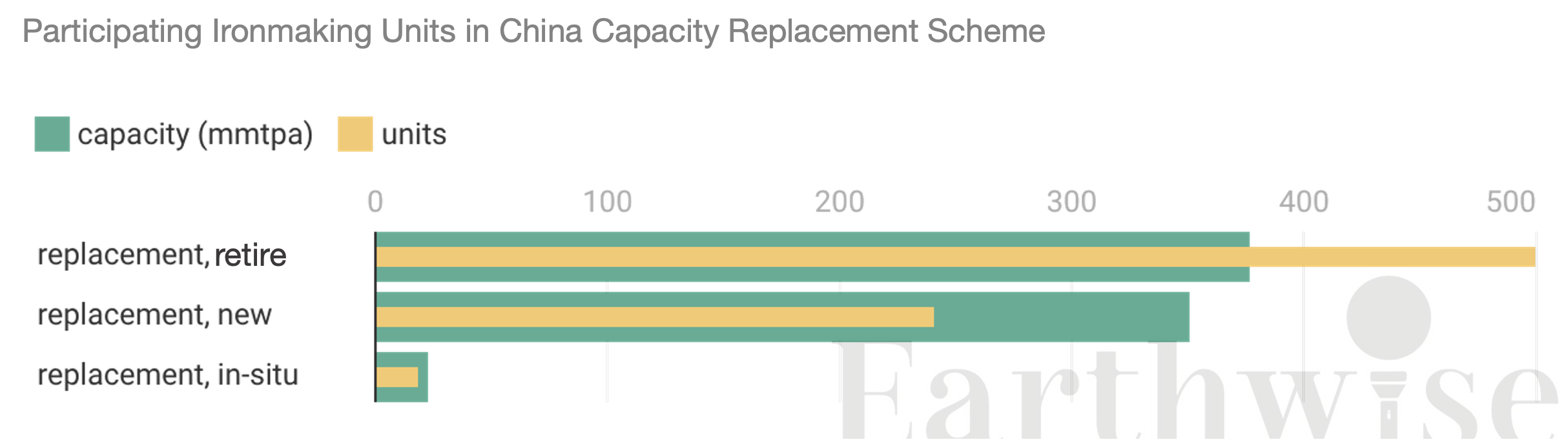
Figure 1: Participating Ironmaking Units in China Capacity Replacement Scheme
*Categories:
replacement, in situ: The ironmaking unit participates in the capacity replacement scheme through campaign replacement, overhaul/relining, expansion, relocation, or other in-situ reconstruction and technological modification processes, where the replacement phase-out and replacement newbuild components correspond to different versions or stages of the same furnace asset rather than separate facilities;
replacement, new: The ironmaking unit participates in the capacity replacement scheme as a newly established project;
replacement, retire: The ironmaking unit participates in the capacity replacement scheme as a retired project.
Table 1: Participating Ironmaking Units in China Capacity Replacement Scheme (till May 17, 2026)
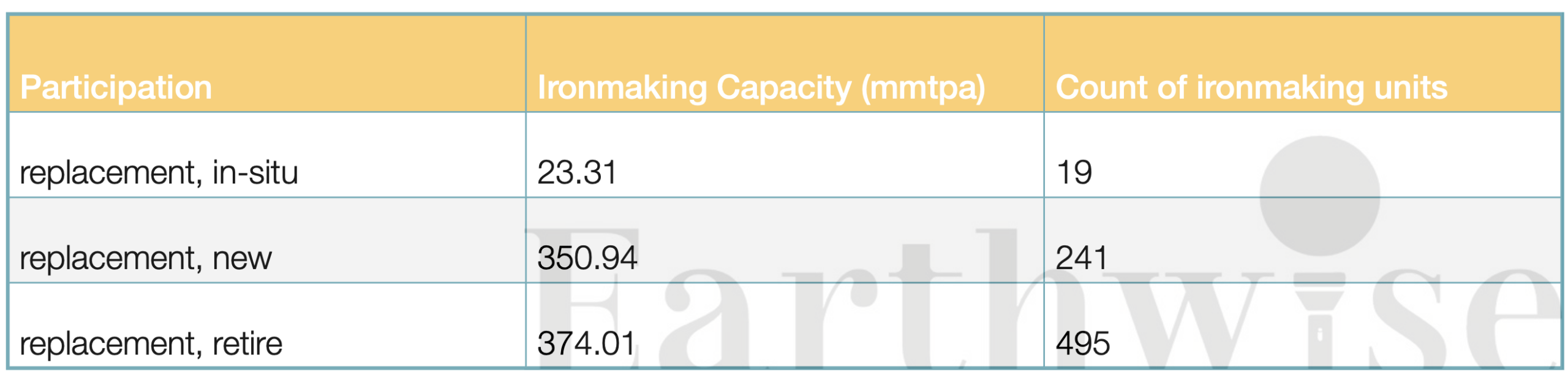
*Remarks: A small number of new projects commissioned since 2018 are not included because no capacity replacement information could be identified. Some were approved before the implementation of the capacity replacement scheme, while others may still have participated in replacement arrangements but could not be confirmed from public information.
As of 17 May 2026, 755 ironmaking units have participated in China’s capacity replacement scheme, involving 748.27 mmtpa of capacity. This includes 495 replacement retirement units with 374.01mmtpa, 241 replacement newbuild units with 350.94 mmtpa, and 19 in-situ replacement units with 23.31 mmtpa. By unit count, retired units account for around two-thirds of participating units. By capacity, retired and newbuild projects are broadly similar in scale, forming the main pathway for ironmaking capacity renewal.
The replacement process also shows clear equipment upscaling. The average capacity of retired blast furnaces was 0.75 mmtpa per unit, compared with 1.46 mmtpa per unit for newbuild blast furnaces. Newbuild furnaces were therefore 1.94 times larger on average.
Based on identified projects, the ratio of retired capacity to newbuild capacity is 1.06:1**. This is close to the minimum replacement requirement for non-key regions under China’s capacity replacement rules. The ratio may be slightly underestimated, as some new projects have been announced or commissioned without publicly disclosed or identifiable corresponding retired units and are therefore not included in the matching exercise. Overall, identified replacement projects show an update pathway based on capacity reduction, larger furnace sizes, and greater capacity concentration.
**Ratio of Retired vs. Newbuild Capacity = Capacity (in-situ + retired) / Capacity (in-situ + new)
Table 2. Capacity Replacement Ratios under China’s Steel Capacity Replacement Rules
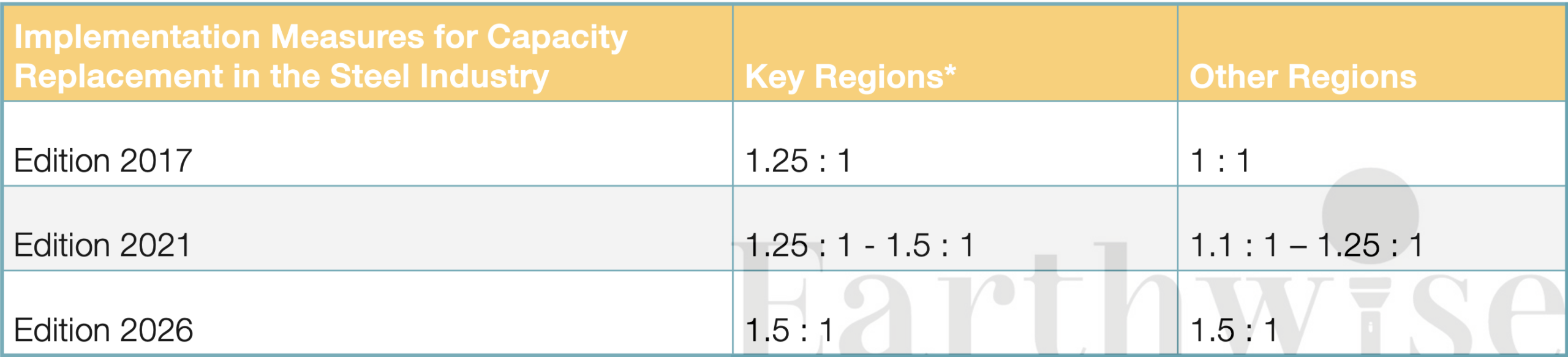
*Remarks: Key regions generally include priority air-pollution control areas such as the Beijing-Tianjin-Hebei region, the Yangtze River Delta, and the Pearl River Delta. The scope of key regions has expanded over successive editions of the implementation measures.
*Source of Implementation Measures: e2017, e2021, e2026
Retirement Implementation Progress
Table 3: Progress Tracking of Ironmaking Units Participating in China Capacity Replacement Scheme
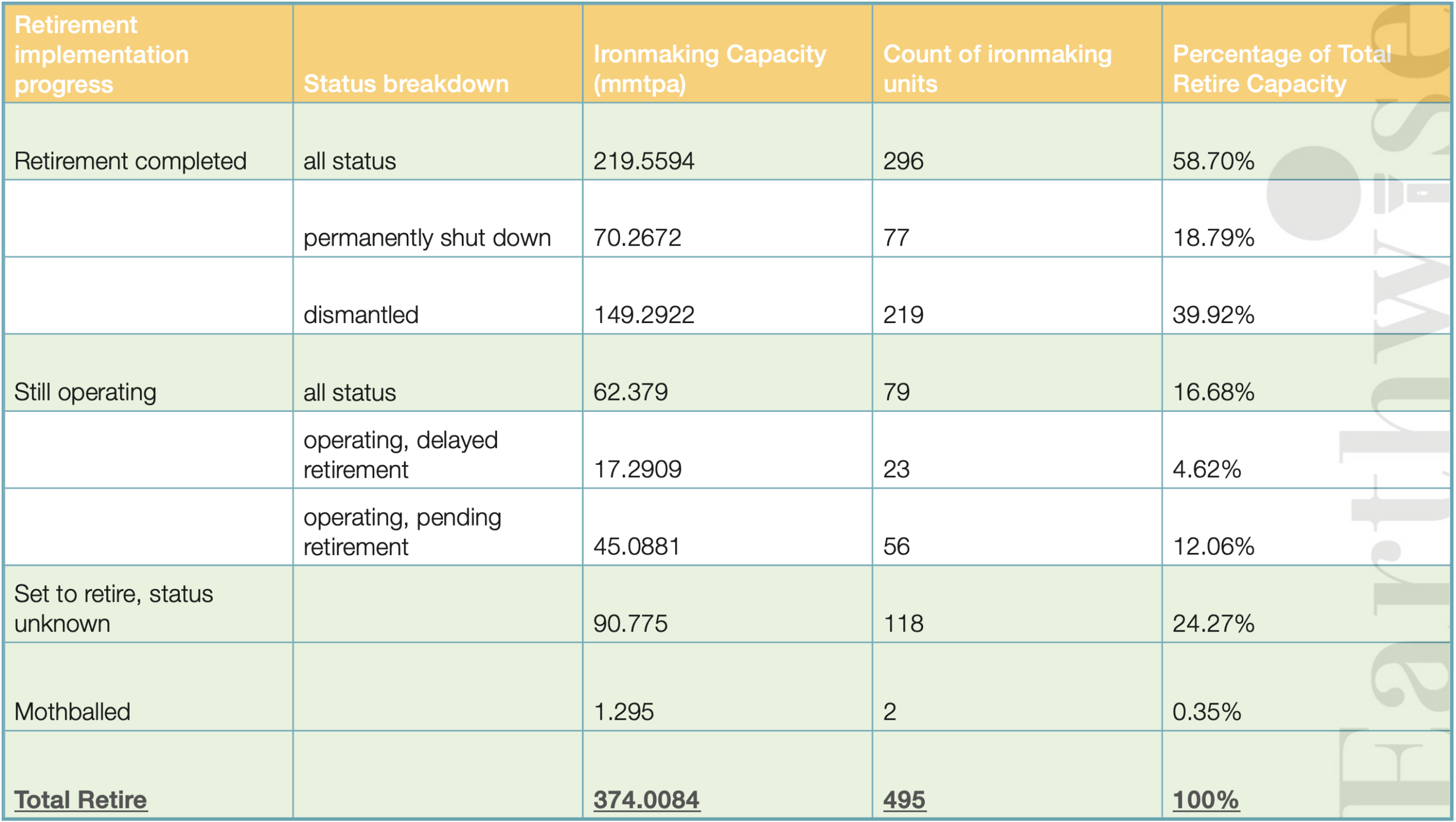
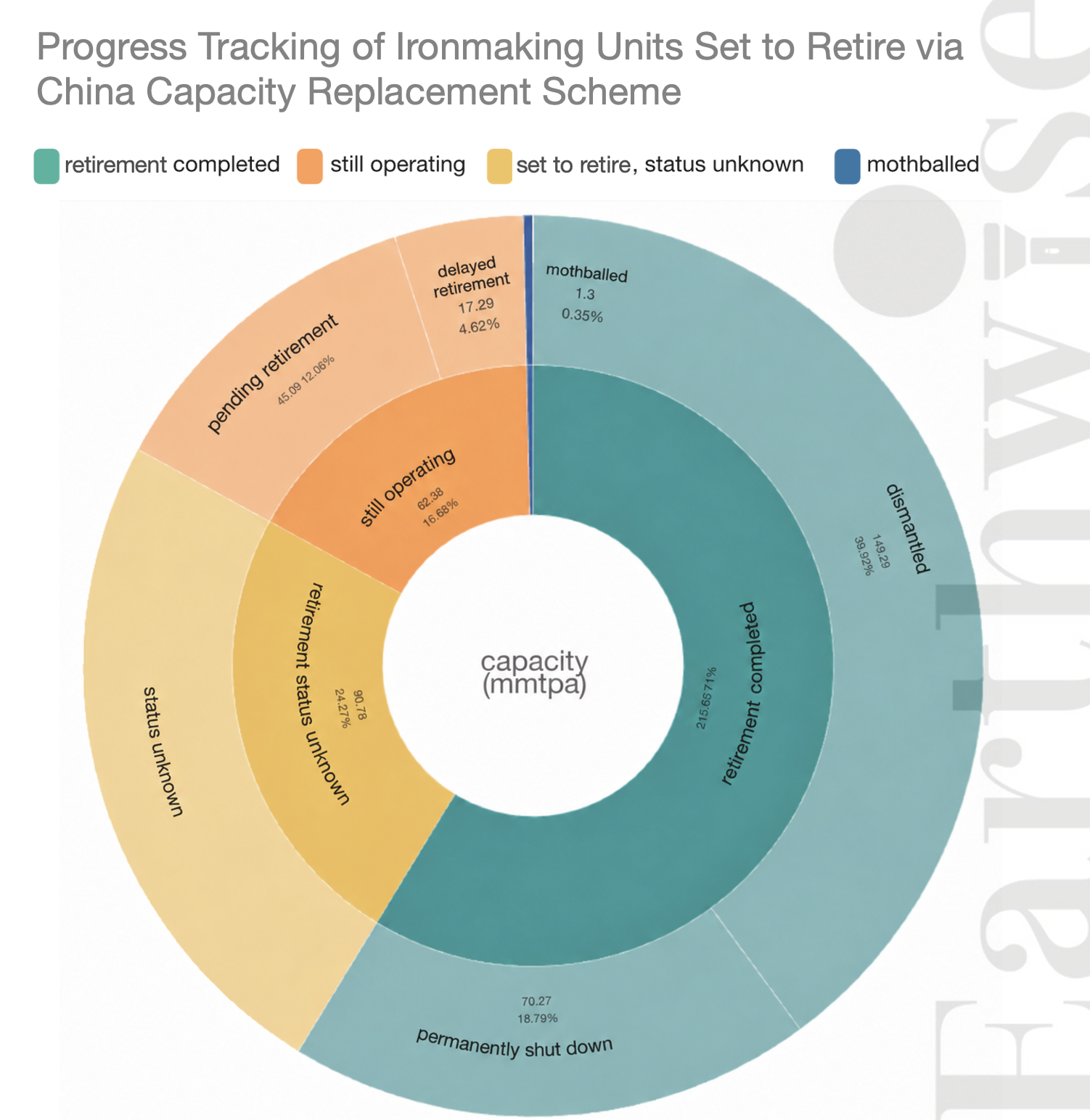
Figure 2: Progress Tracking of Ironmaking Units Participating in China Capacity Replacement Scheme, by Capacity (mmtpa)
Capacity replacement retirement announcements should not be treated as evidence that capacity has already exited operation. Implementation progress needs to distinguish between units that have been dismantled, permanently shut down, remain in operation, or have an unconfirmed final status. Among ironmaking capacity included in replacement retirement arrangements, around 59% has been confirmed as retired. More than two-thirds of this completed capacity has been dismantled, indicating the removal of physical assets, while the remainder has been permanently shut down. At the same time, around 17% of retired capacity remains in operation, mainly in pending or delayed retirement status, reflecting the time lag between retirement announcements, replacement project construction, and actual retirement. A further 24% has reached its planned retirement timing but has no confirmed final status, highlighting a substantial public-information gap between inclusion in a retirement arrangement and verified permanent closure or dismantling.
Furnace Types after Capacity Replacement
Table 4: Furnace Types of New Ironmaking Units Since 2018, Mainland China:
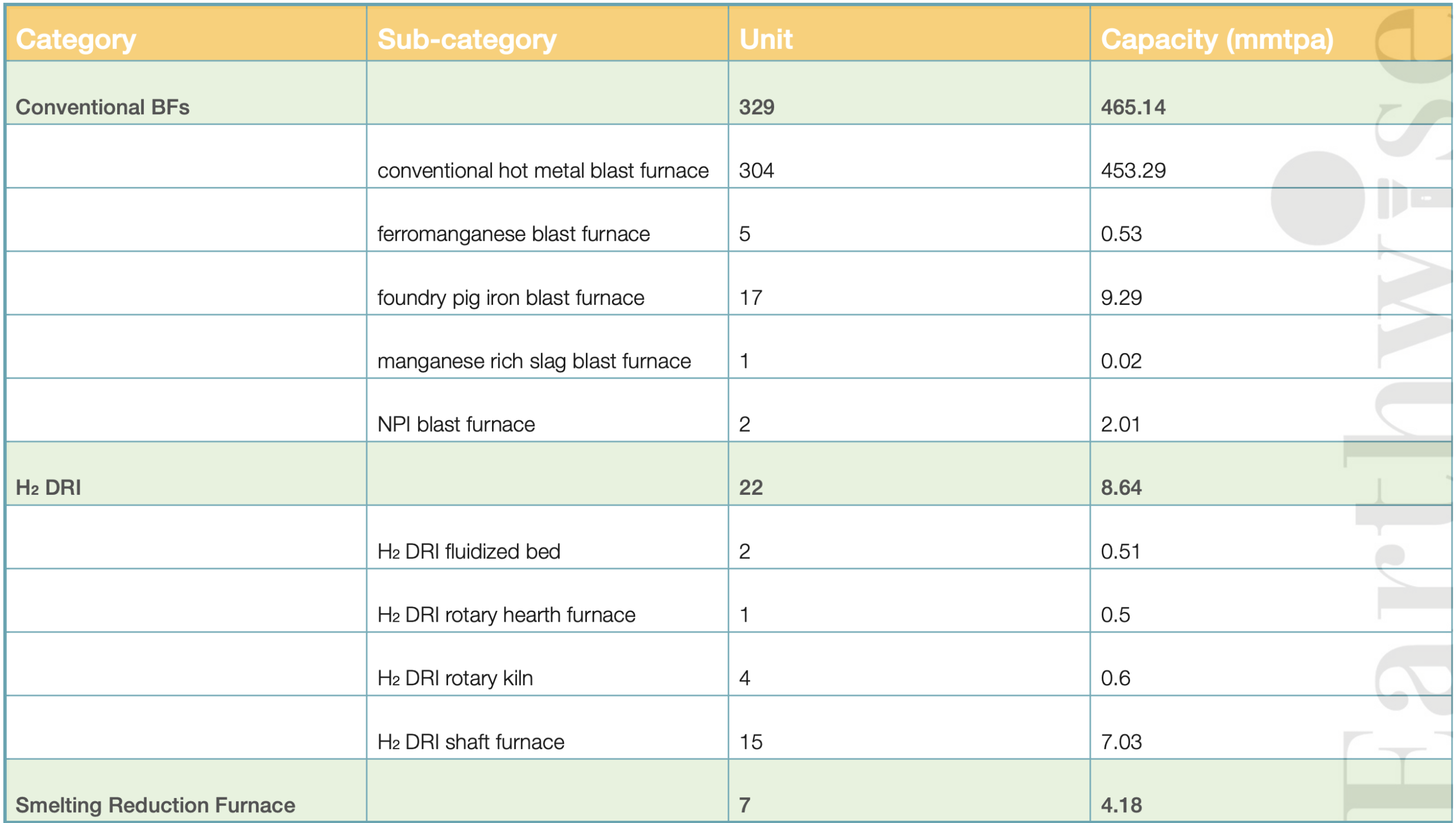
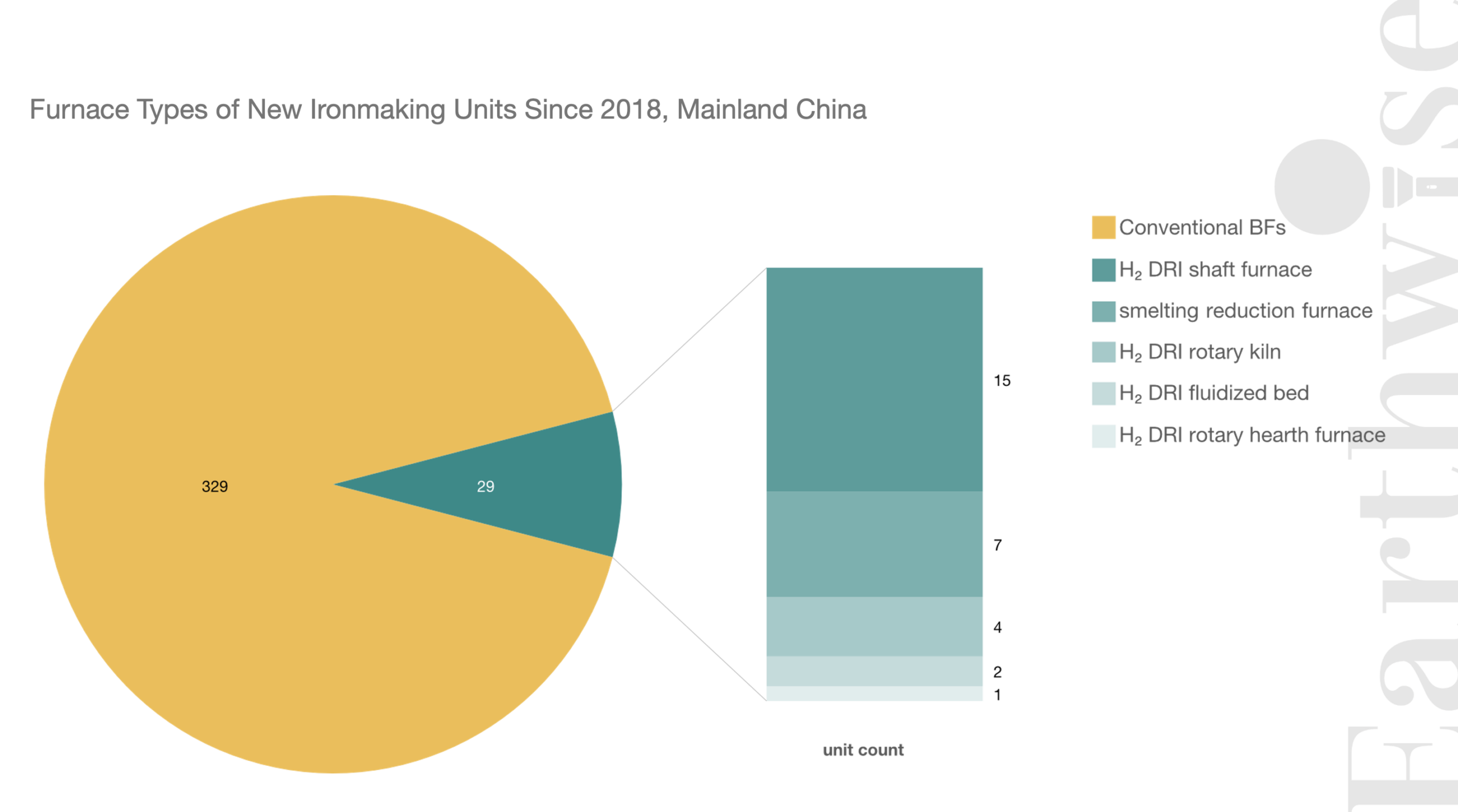
Figure 3: Furnace Types of New Ironmaking Units Since 2018, Mainland China
New ironmaking units commissioned since 2018 remain overwhelmingly conventional blast furnaces. Of 358 identified new units, 329 are conventional blast furnaces, with combined capacity of 465.14 mmtpa, accounting for around 97% of new ironmaking capacity. Conventional hot metal blast furnaces make up the large majority, while foundry pig iron, ferromanganese, nickel pig iron, and other special-purpose blast furnaces account for a small share. This indicates that, at this stage, capacity replacement has primarily supported the renewal, consolidation, and upscaling of the existing blast furnace system rather than a structural shift in ironmaking technology.
Low-emission green alternatives have begun to appear among new projects, but remain limited in scale. H₂ DRI and smelting reduction furnaces together account for only 29 units and around 12.82 mmtpa, representing less than 3% of new capacity. H₂ DRI shaft furnaces are the largest alternative route, with 15 units and 7.03 mmtpa, followed by seven smelting reduction furnaces with 4.18 mmtpa. Their capacity share remains lower than their share of unit count, indicating that these projects are still largely at an early deployment and scale-validation stage (for more details on green alternatives, please refer to the insight article: China’s Green Ironmaking Transition: Technology Uptake and Emerging Alternatives).
Commissioning Trends under the Capacity Replacement Scheme
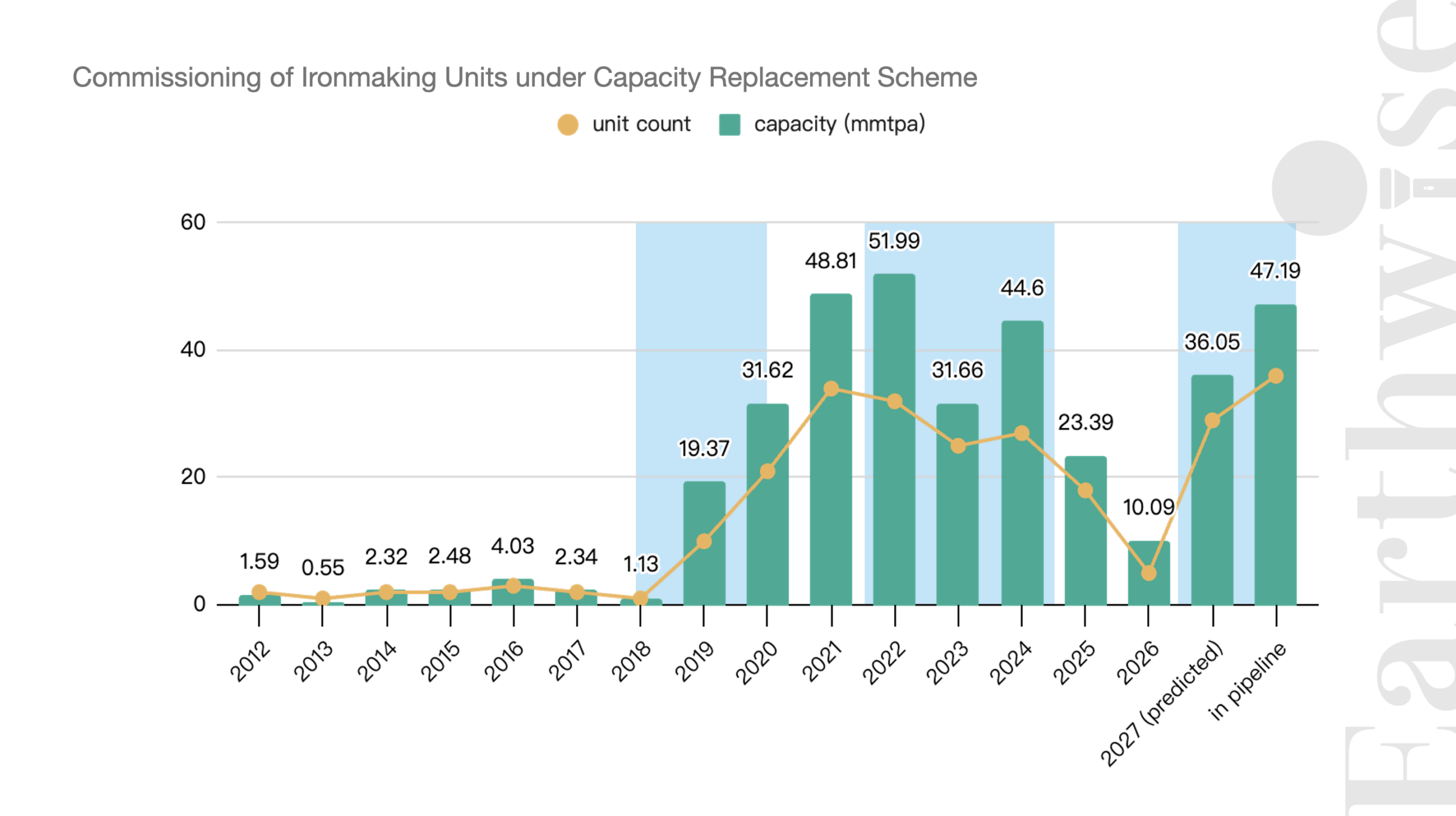
Figure 4: Commissioning of Ironmaking Units under Capacity Replacement Scheme
Commissioning of new ironmaking capacity has closely followed changes in the implementation of China’s capacity replacement scheme. Following the introduction of the scheme in late 2017, new capacity commissioning began to rise from 2019 and increased sharply over the following three years, reaching a peak in 2021-2022. The temporary suspension of the scheme in early 2020, followed by its reopening in mid-2021, appears to have contributed to a subsequent slowdown in commissioning in 2023, before activity rebounded in 2024.
The scheme was suspended again in mid-2024 and reopened in May 2026. Based on the current pipeline, a new wave of commissioning is likely to emerge from around 2028, largely driven by projects already under construction or in the pipeline. This suggests that capacity replacement policy changes have influenced not only the scale of new ironmaking capacity, but also the timing and clustering of project commissioning.
Remaining Retirement Candidates under Capacity Replacement Scheme
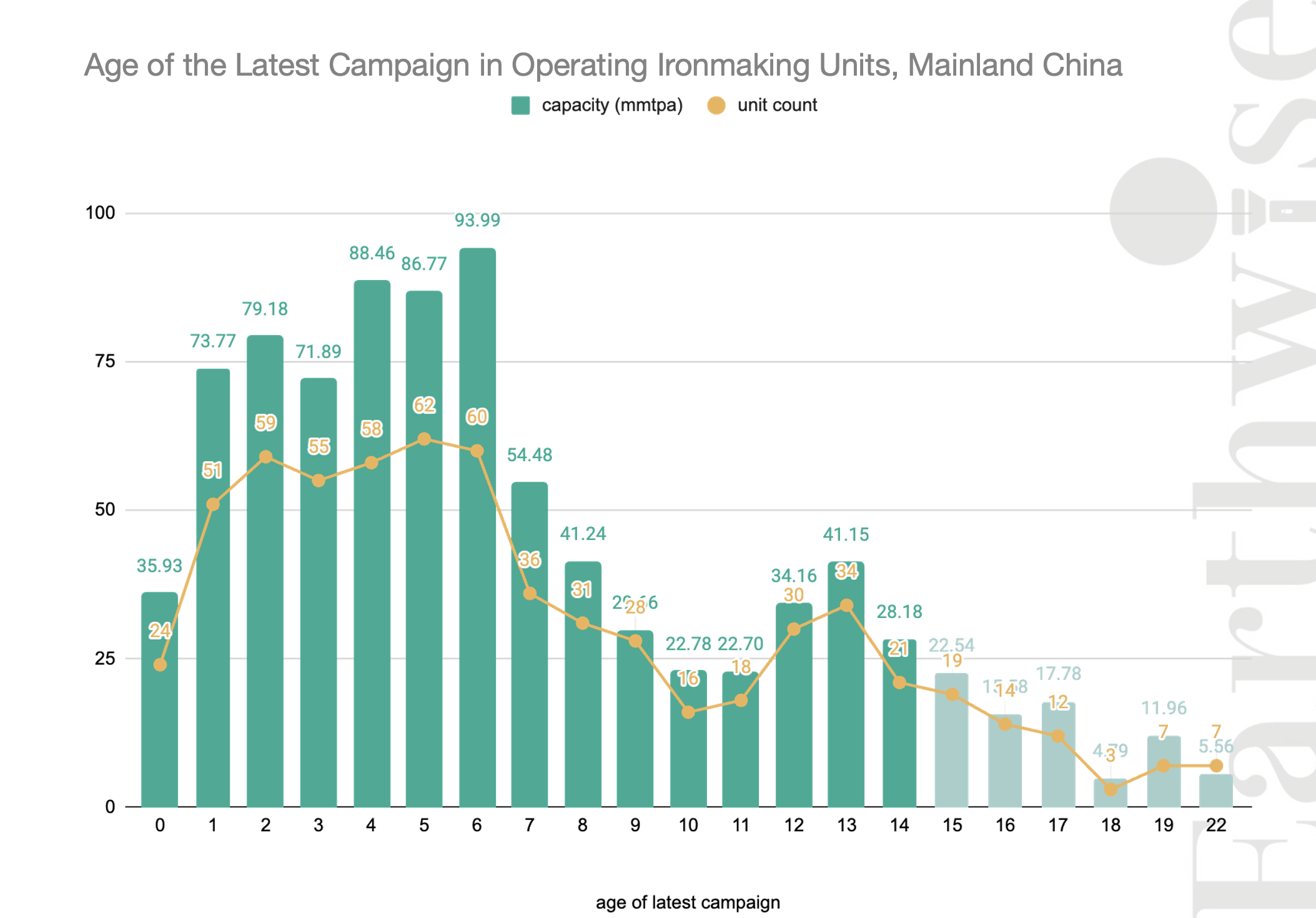
Figure 5: Age of the Latest Campaign in Operating Ironmaking Units, Mainland China
*Units with age of 15 and above are retirement candidates
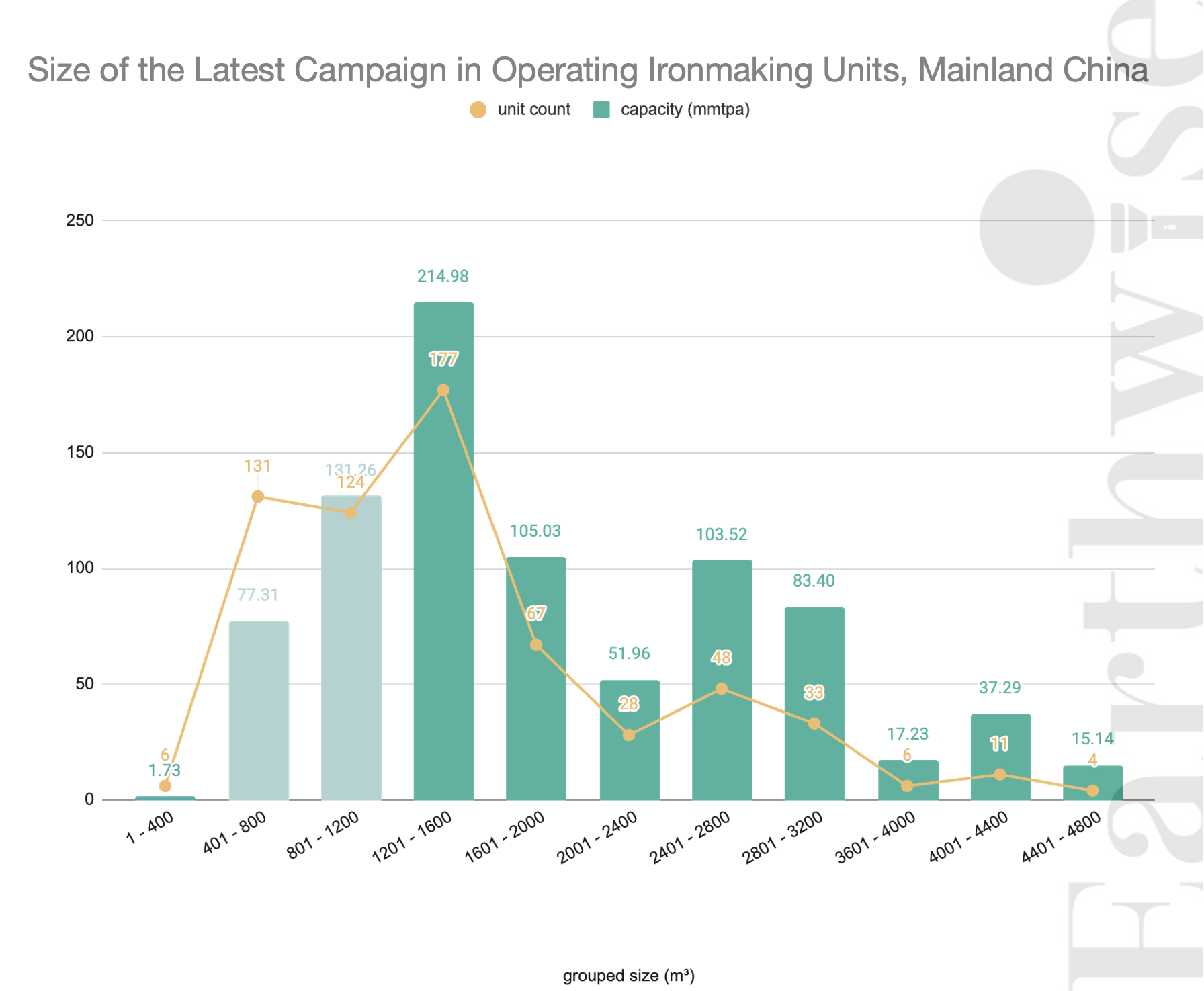
Figure 6: Size of the Latest Campaign in Operating Ironmaking Units, Mainland China
*Units below size 1200 m³ and above 400 m³ are retirement candidates, according to Guidance Catalogue for Industrial Restructuring PRC, version 2024.
The remaining potential retirement pool includes two main groups of operating blast furnaces: units with a latest campaign age of 15 years or more, and units with size between 400 m³ and 1,200 m³. These thresholds reflect both typical blast furnace campaign life expectations and China’s long term industrial policy promoting larger, more efficient ironmaking assets. The first group includes 62 furnaces with 78.21 mmtpa of capacity, equivalent to 8.86% of total operating capacity. The second includes 255 furnaces with 208.57 mmtpa, or 23.63% of operating capacity. 41 units of 34.75 mmtpa are both 15 years or older, and between the size 400 m³ to 1200 m³, therefore qualify as the most reasonable candidate for retirement in the nearest future, equivalent to 3.94% of total operating capacity. These older and smaller units represent the remaining part of the operating fleet most likely to face future retirement, replacement, or consolidation pressure.