
This is one of the insight articles of Earthwise Institute's research project - Ironmaking Asset Transitional Windows, as part of the research series - Industrial Asset Transitional Reinvestment. View the full project content
What the data shows
China’s blast furnace transition windows are concentrated in the 2030s, particularly the late 2030s, while the cumulative progression begins well before this peak and reaches almost the entire conventional blast furnace fleet by 2042.
Key highlights
- Transition opportunities accumulate steadily before the main concentration: around 26% of conventional blast furnace capacity will have reached its next estimated relining window by the end of 2030, rising to 51% by 2035 and around 96% by 2042.
- Highest transition potential in the 17th Five Year Plan (FYP) period: the 17th FYP period overlaps with the period of highest transition potential, with 279 blast furnaces and 367.14 mmtpa (million metric tonnes per annum) of conventional blast furnace capacity estimated to reach their next major relining window.
- 2034-2041 is the most crucial transition window: The period of 2034-2041 forms the most concentrated annual transition window, during which 57.53% of national operating conventional BF capacity is expected to reach its next major relining window. During this period, more than 50 mmtpa of capacity will reach estimated relining windows each year, and the relining demands will peak in 2039 at 86.05 mmtpa.
- A substantial near-term group has already reached or is approaching its transition window: 99 blast furnaces representing 119.80 mmtpa are either pipeline units or have estimated relining windows in or before 2026, placing a meaningful share of capacity within the earliest identified transition period.
Earthwise Institute has developed an analytical framework to estimate the next major transition window for each conventional blast furnace. This window represents the period when an asset is most likely to require a significant reinvestment decision. It is an indication of when operators may need to choose between continuing with conventional blast furnace operations, pursuing a lower-carbon upgrade, or replacing and phasing out the asset.
The model combines three layers of evidence to produce this estimate:
- a baseline campaign-life derived from ignition or major capital interventions;
- adjustments based on the engineering significance of maintenance events;
- refinements based on the condition of critical lifetime-constraining systems.
Readers are encouraged to refer to the methodology paper for blast furnace transition window estimation & financial feasibility evaluation: Methodology - Estimating Blast Furnace Transition Windows , for a detailed explanation of these components.
The resulting transition window should be understood as an indicative decision point for asset level transition planning, rather than a fixed technical end-of-life date.
National Transition Windows
China’s conventional blast furnace fleet will progressively reach its next estimated relining windows over the coming two decades. Among all currently identified conventional blast furnace capacity, around 26% will have reached its next estimated relining window by the end of 2030, increasing to around 51% by the end of 2035 and approximately 96% by 2042.
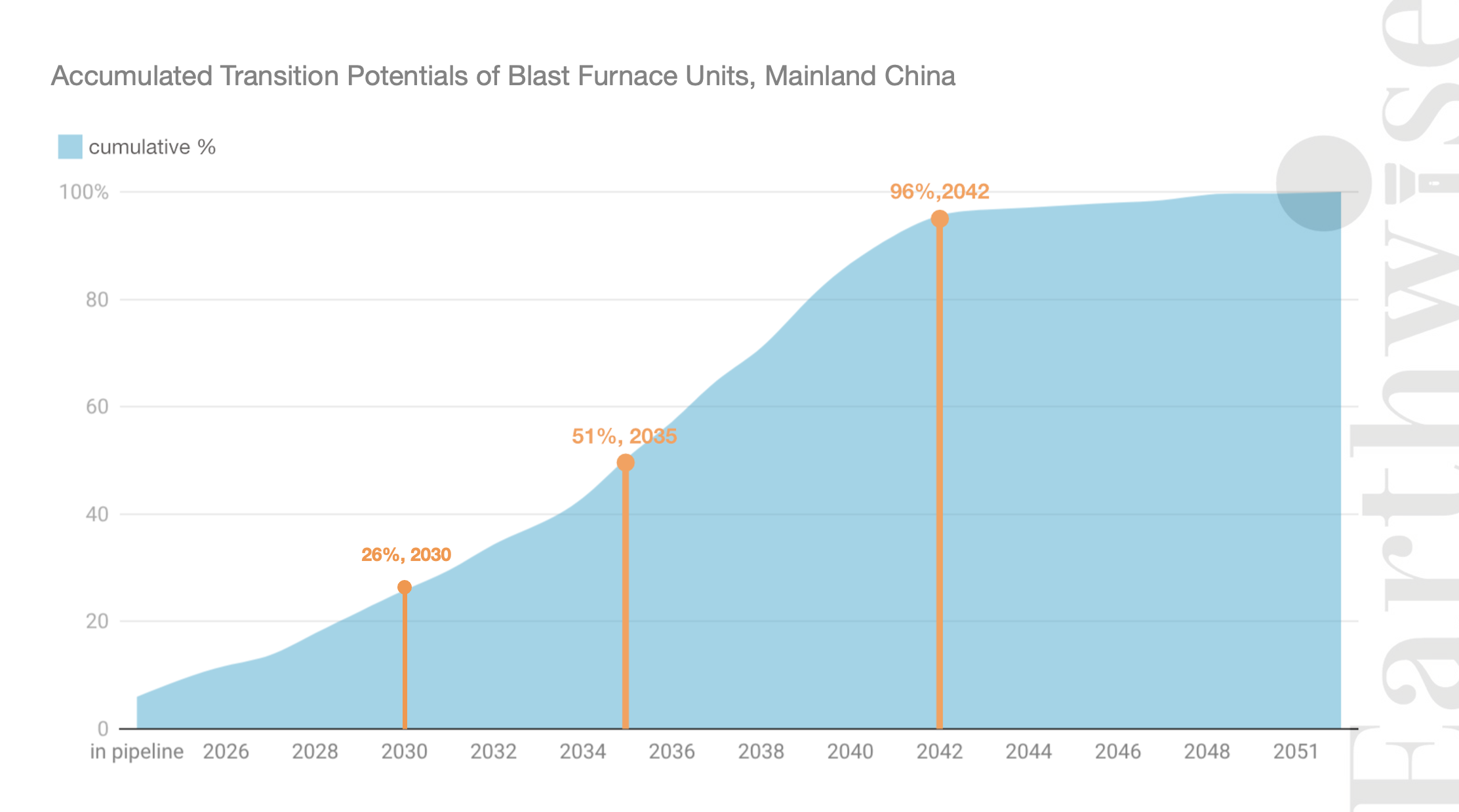
Figure 1: Accumulated Transition Potentials of Blast Furnace Units over Time, Mainland China
Figure 1 presents this cumulative progression. For each year, the figure shows the share of currently identified conventional blast furnace capacity that is estimated to have reached its next relining window by that point, representing the accumulated proportion of the fleet exposed to a relining-based transition opportunity.
The progression shows that transition windows accumulate substantially through the 2030s. More than half of currently identified conventional blast furnace capacity will have reached its next estimated relining window by 2035, while almost the entire fleet will have done so by 2042. This provides the national-level timeline for the annual distribution of transition windows examined in the following section.
National Transition Windows - by Five-Year Plan period
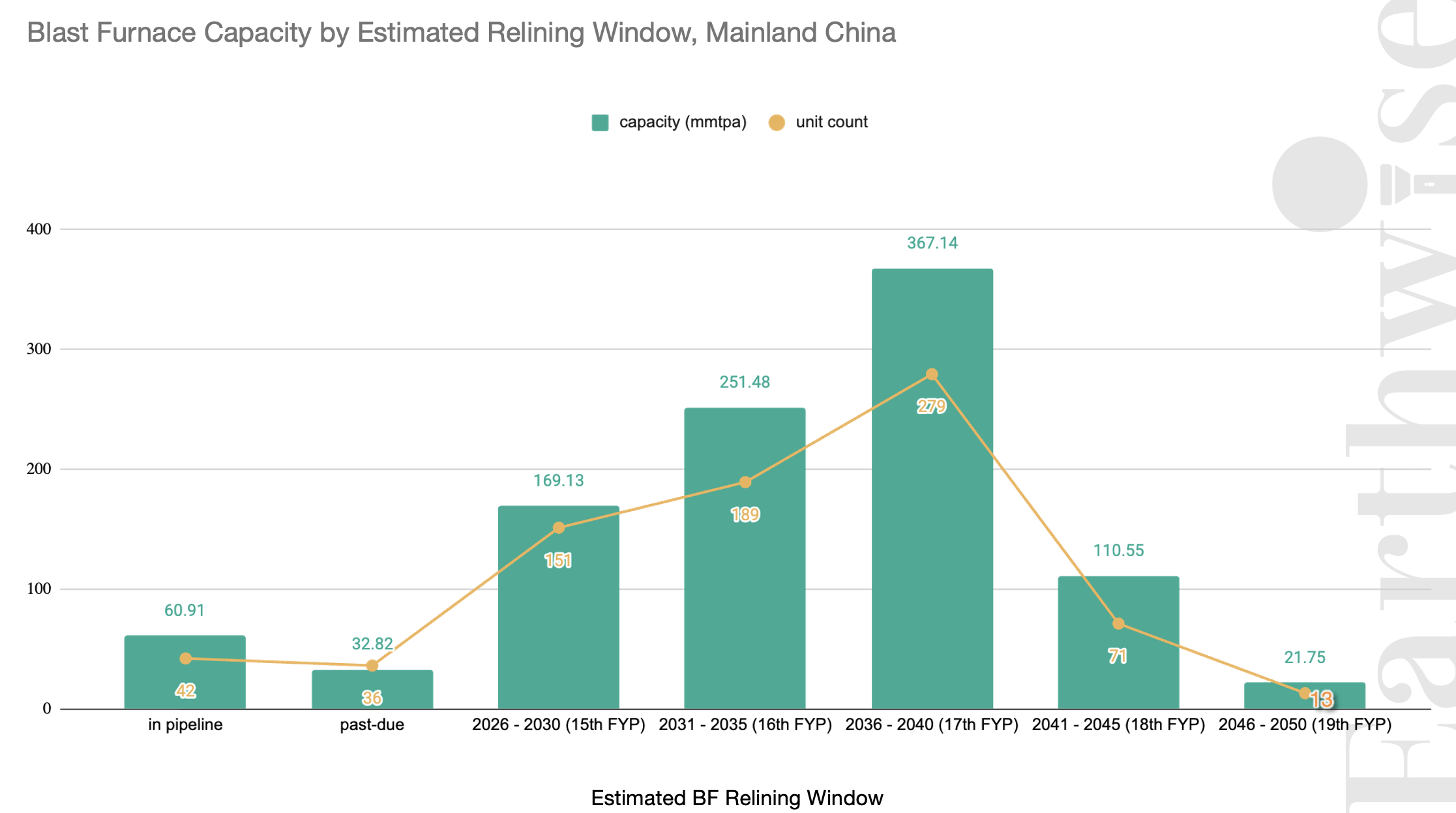
Figure 2: Blast Furnace Capacity by Estimated Relining Window, Mainland China
*Remarks I: Year categories represent estimated BF relining windows; pipeline units are shown separately.
*Remarks II: Past-due = estimated relining window occurring before 2026.
The timing of estimated blast furnace relining windows places the 2030s at the center of China’s next major transition cycle. The largest concentration falls within 2036-2040, corresponding to the 17th Five-Year Plan (FYP) period, when 279 BF units representing 367.14 mmtpa of capacity are estimated to reach their next major relining window.
This concentration begins to build during the 16th FYP (2031-2035), when another 251.48 mmtpa of capacity is estimated to reach a relining window. Together, the two FYP periods covering 2031-2040 account for the largest portion of upcoming relining opportunities across the national fleet.
We therefore identify the 2030s, and particularly 2036-2040 (17th FYP), as the pivotal policy cycle for shaping blast furnace transition decisions in mainland China.
National Transition Windows - Annual Distribution
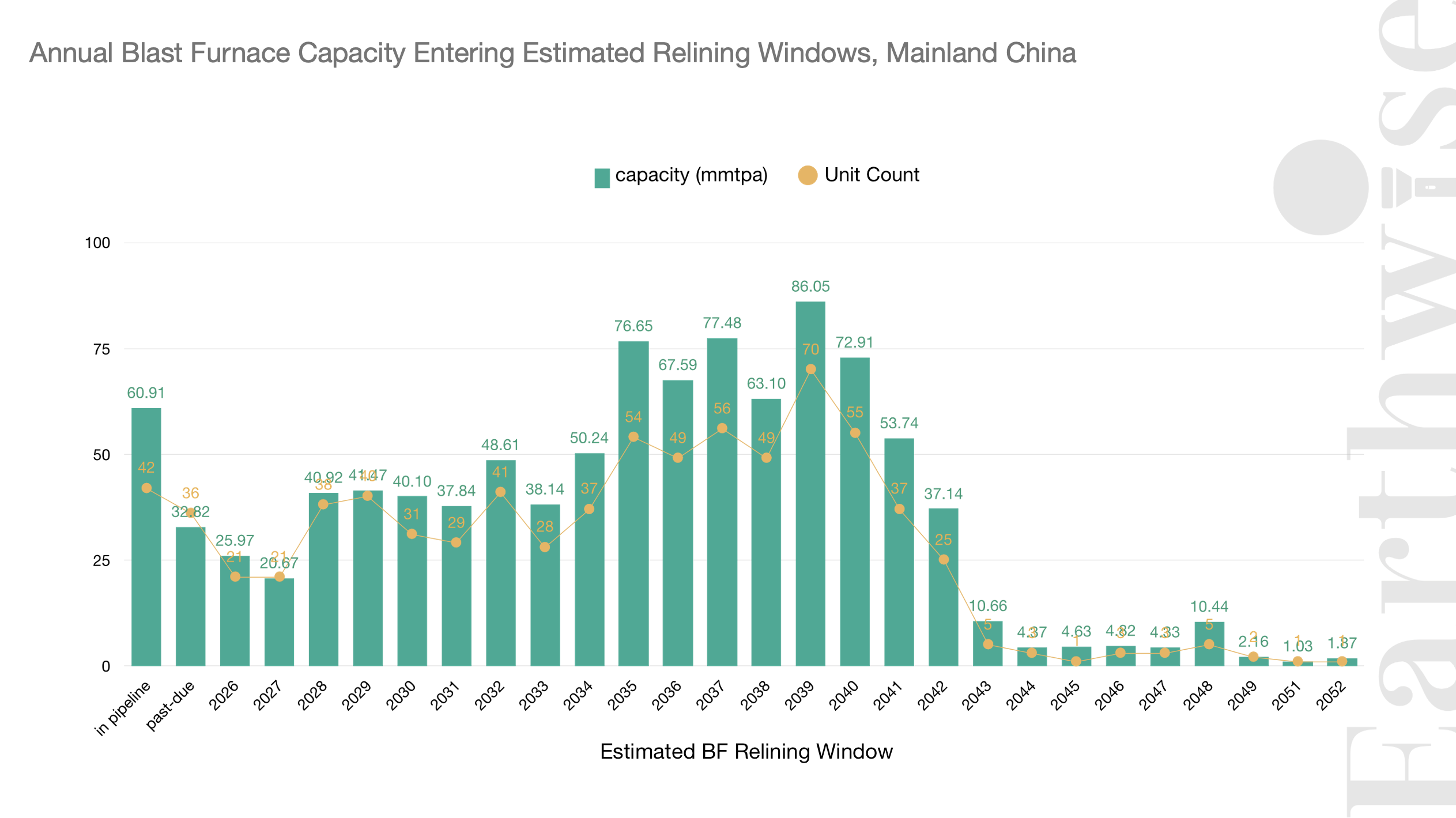
Figure 3: Annual Blast Furnace Capacity Entering Estimated Relining Windows, Mainland China
*Remarks I: Year categories represent estimated BF relining windows; pipeline units are shown separately.
*Remarks II: Past-due = estimated relining window occurring before 2026.
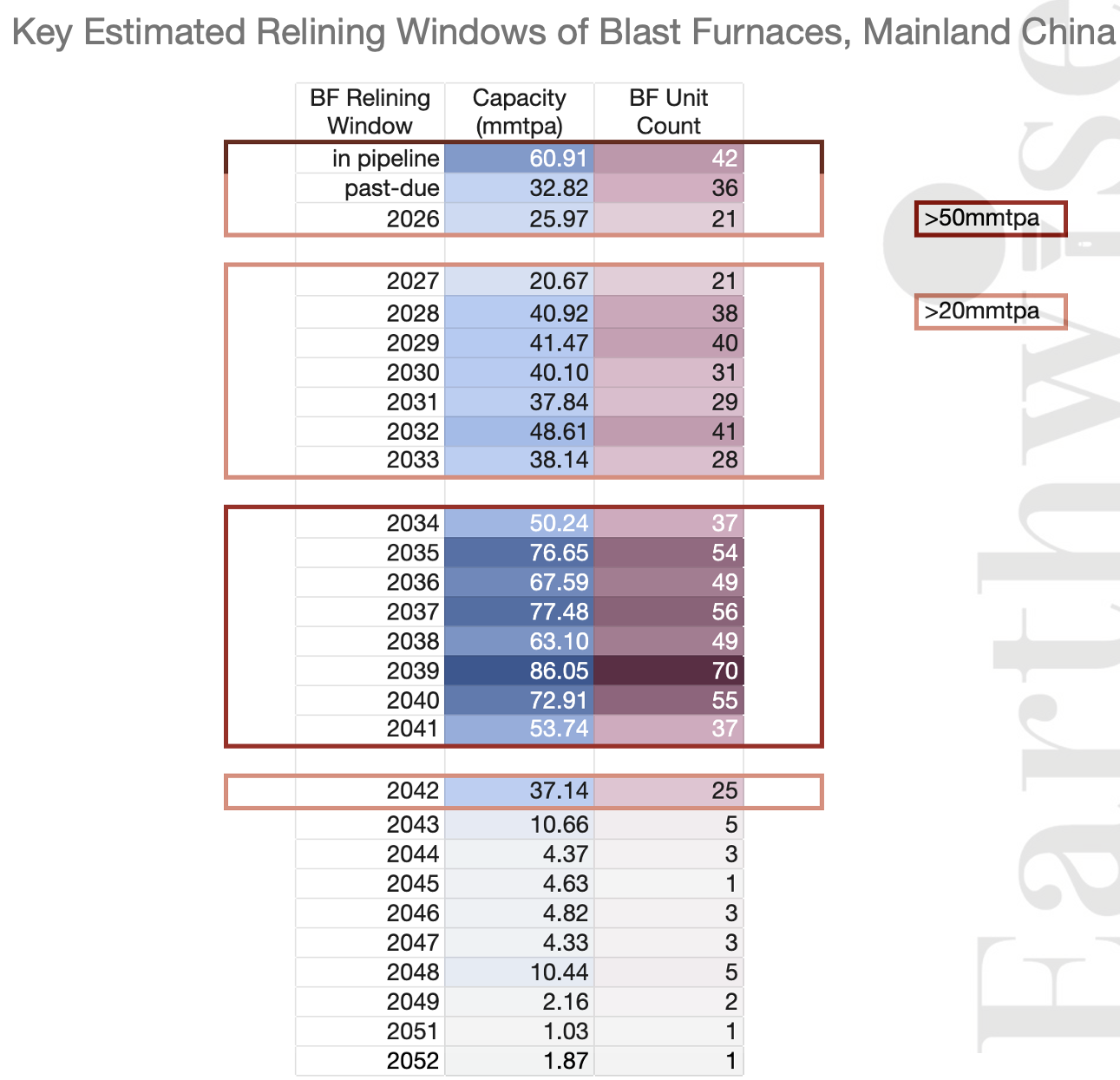
Figure 4: Key Estimated Relining Windows of Blast Furnaces, Mainland China
*Remarks I: Year categories represent estimated BF relining windows; pipeline units are shown separately.
*Remarks II: Past-due = estimated relining window occurring before 2026.
At the annual level, 2034-2041 forms the most concentrated period for blast furnace transition in mainland China. More than 50 mmtpa of conventional blast furnace capacity is estimated to reach its next relining window every year during this period. The concentration peaks in 2039, when 70 units representing 86.05 mmtpa of capacity are estimated to reach their relining windows.
The wider period from 2027 to 2042 also represents a sustained sequence of transition opportunities. Between 2027 and 2033, annual capacity reaching an estimated relining window remains above 20 mmtpa, followed by the higher-intensity period from 2034 to 2041. A further 37.14 mmtpa reaches its estimated window in 2042. From 2043 onward, the annual scale drops substantially, with less than 11 mmtpa reaching an estimated relining window in any individual year shown. This places the main national relining cycle between 2027 and 2042, with 2034-2041 forming its most concentrated phase.
A total of 99 units with 119.80 mmtpa of capacity are already within, or have reached, their identified transition window. This includes 42 pipeline units with 60.91 mmtpa of capacity, as well as 57 units with 58.79 mmtpa that reached their estimated relining window in or before 2026, including 36 past-due units and 21 units reaching the window in 2026. These assets form the group requiring the most immediate verification of their actual relining, upgrade, life extension, or phase-out plans.
Transition Windows of Small Capacity Ironmakers
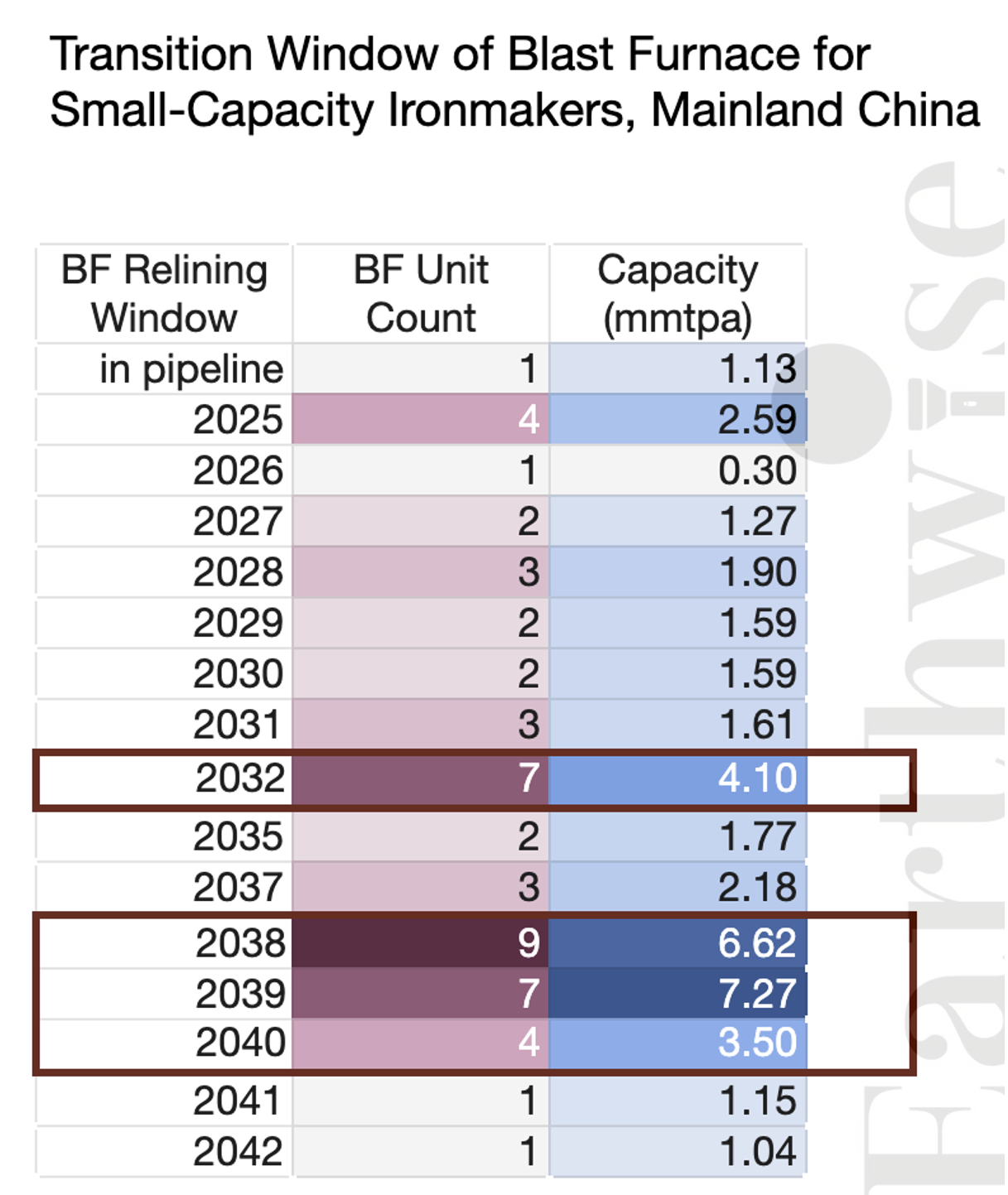
Figure 5: Transition Window of Blast Furnace for Small-Capacity Ironmakers, Mainland China
This analysis covers small-capacity conventional blast furnace operators, defined as companies or corporate groups with total conventional blast furnace ironmaking capacity of no more than 2.08 mmtpa, equivalent to approximately two 1,080 m³ blast furnaces. This category includes 33 companies or corporate groups operating 52 blast furnaces with a combined capacity of 39.61 mmtpa.
These companies typically operate only one or two units, with average company-level ironmaking capacity of 1.20 mmtpa. A single furnace reaching a relining or major reinvestment decision can therefore represent a substantial share of the company’s total ironmaking capacity, concentrating asset renewal and transition decisions at the company level.
More than 4 mmtpa of capacity is already within a near-term transition window, including one unit pipeline and 5 reaching their estimated relining windows in 2025 and 2026. While this represents a relatively small share of national blast furnace capacity, it can account for a substantial share of capacity at the individual company level. Relining, upgrading, life extension, temporary shutdown, or phase-out decisions may therefore affect a large proportion of the operating base of the companies concerned.
The year 2032 therefore marks the first concentrated period of major relining and capital decisions among small-capacity ironmakers, as seven units with 4.10 mmtpa of capacity are estimated to reach their transition windows. The strongest concentration occurs during 2038-2040. During which 20 units with 17.39 mmtpa of capacity are estimated to enter their next relining windows, equivalent to around 44% of the total capacity represented by these small-capacity ironmakers.